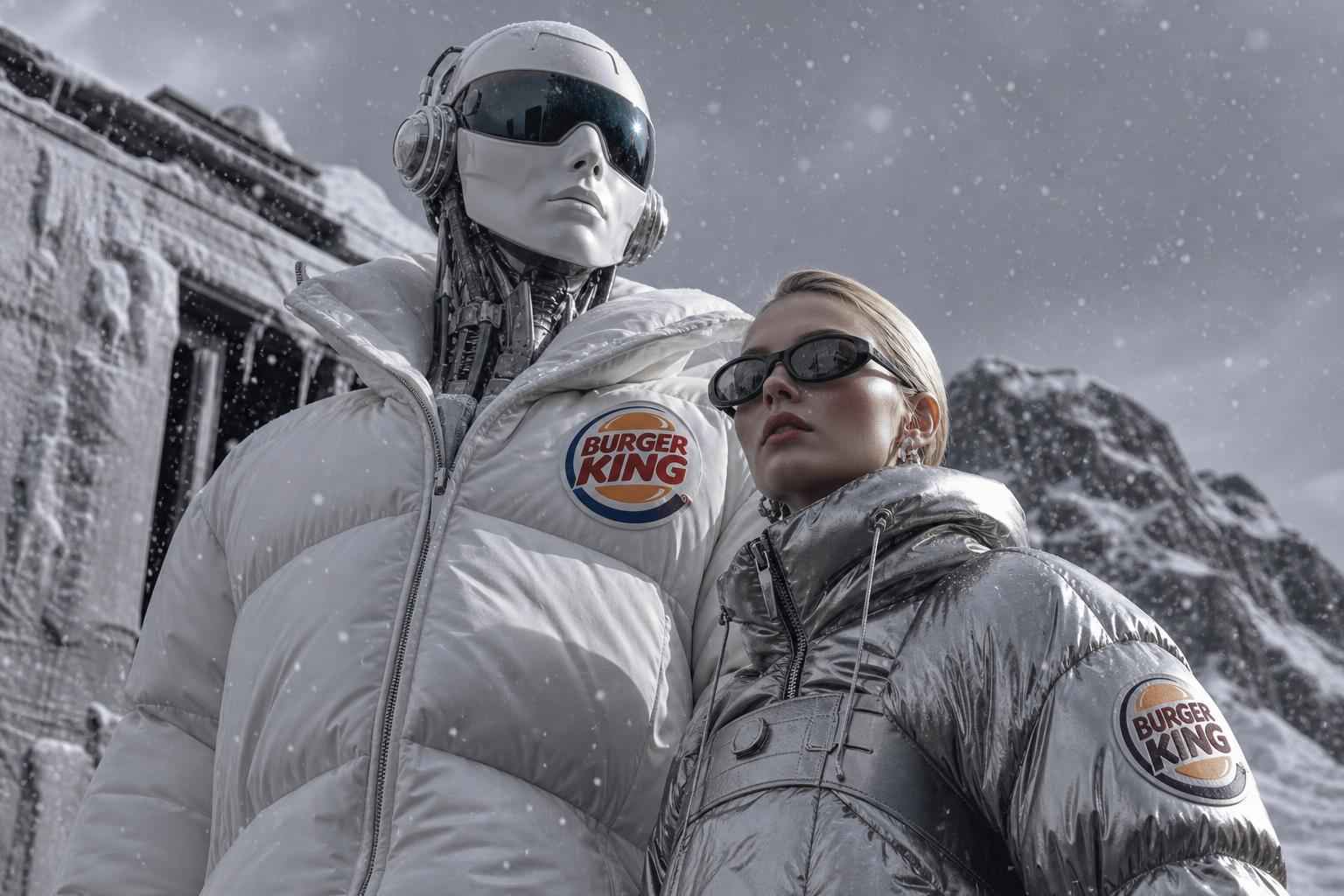
Burger King Advertising Strategy: How Disruptive Marketing Campaigns Compete With Industry Leaders
Focused keyphrase: Burger King Advertising Strategy
What does it really take for a challenger brand to stare down a giant, disrupt a category, and still stay culturally unforgettable? The answer is not just media spend. It is not just celebrity endorsements. And it is definitely not bland, safe messaging. The Burger King Advertising Strategy has become one of the clearest modern examples of how a bold brand can use disruptive marketing campaigns, sharp positioning, and cultural timing to compete with industry leaders that often have bigger budgets, broader scale, and deeper legacy power.
For marketers, founders, and brand leaders, Burger King offers something more valuable than admiration: a playbook. It shows what becomes possible when a brand decides not to blend in. It also raises a critical question for your own business: if your category is crowded, why are you still marketing like everyone else?
That is why this strategy matters beyond fast food. Whether you run an eCommerce brand, a service business, a challenger startup, or a mature business in need of fresh momentum, there is a lot to learn from the way Burger King has used creative advertising, digital virality, and emotionally intelligent provocation to drive relevance.
Why Burger King’s Advertising Strategy Stands Out
Burger King sits in one of the most competitive arenas in business: quick service restaurants. It has had to compete not only with McDonald’s, but also with Wendy’s, KFC, Five Guys, Chick-fil-A, and a new generation of delivery-first food brands. In such a noisy market, ordinary advertising gets swallowed fast. That is exactly why Burger King leaned into a differentiated tone: witty, rebellious, culturally responsive, and often deliciously confrontational.
The challenger brand advantage
There is a powerful advantage in not being the market leader. Leaders often feel pressure to protect what they have. Challengers can take sharper risks. Burger King has repeatedly used this position to frame itself as the anti-boring option, the anti-corporate choice, and the brand willing to say what others cannot.
That framing works because consumers are not just buying food. They are buying identity signals, humor, emotion, convenience, and stories they can retell. Burger King understands that people remember a campaign that makes them laugh, flinch, debate, or post. They rarely remember one that merely informs.
Disruption is not noise for the sake of noise
One of the smartest lessons from the Burger King Advertising Strategy is that disruptive marketing is not random chaos. The best Burger King campaigns usually do one or more of the following:
- Turn a product truth into a dramatic public statement
- Directly contrast the brand with an industry leader
- Use digital behavior as part of the campaign mechanism
- Create earned media through controversy, surprise, or originality
- Make the audience feel clever for participating
This is strategic provocation, not gimmickry. That distinction matters.
The Core Principles Behind Burger King’s Marketing Success
1. Bold brand positioning
Burger King’s voice rarely sounds neutral. It is opinionated. It has edge. It often behaves like a brand that knows culture moves fast and politeness rarely trends. This gives Burger King a strong memory structure in the minds of consumers. If McDonald’s often leans toward broad comfort and familiarity, Burger King can occupy a space that feels more irreverent and less polished.
In branding terms, that is incredibly useful. Distinctiveness wins attention. And attention, when sharpened by emotional response, drives recall.
2. Product truths turned into campaigns
Many brands struggle because they have product features but no story. Burger King has repeatedly transformed operational or product details into conversation-driving campaign ideas. One of the most famous examples is the “Moldy Whopper” campaign, which showcased the absence of artificial preservatives by showing a Whopper decomposing over time. It was visually uncomfortable, yes. But that was the point.
The campaign was covered widely and discussed across the marketing world because it dared to make “real food” look real rather than idealized. You can read coverage from Reuters on Burger King removing preservatives and its related advertising push.
That is exactly where Burger King excels: turning a brand difference into a public conversation.
3. Competitor contrast as a growth engine
Burger King has made an art form out of competitor comparison, especially in relation to McDonald’s. Some brands avoid naming rivals. Burger King often benefits by doing the opposite. It uses comparisons to sharpen positioning and invite consumers into a playful rivalry that fuels engagement.
A standout example was the “Whopper Detour” campaign, where Burger King offered customers a one-cent Whopper if they were near a McDonald’s location and used the Burger King app. It brilliantly combined geolocation, app adoption, competitive theater, and public relations. The campaign was covered by CNN and became a benchmark for location-based brand creativity.
Think about the layers of intelligence there:
- It drove app downloads
- It hijacked competitor foot traffic
- It turned a discount into a story
- It generated massive earned media
- It reinforced Burger King’s bold personality
That is not “just a promotion.” That is strategic brand engineering.
Campaign Case Studies That Explain the Burger King Formula
The Moldy Whopper: Risk as credibility
Most food advertising aims for glossy perfection. Burger King did the unthinkable and showed decay. Why? Because the campaign was not selling beauty. It was selling authenticity. The message was that real food changes. Preservative-free food does not remain visually frozen forever.
This campaign matters because it proves an essential modern marketing principle: audiences reward brands that tell a compelling truth in an unexpected way. It was gross to some viewers, fascinating to others, and impossible for many to ignore. In a fragmented media environment, that kind of attention is extraordinarily valuable.
Whopper Detour: Tech-enabled disruption
The genius of Whopper Detour was how it merged mobile technology with competitive mischief. Burger King did not simply launch an offer; it made the offer depend on user location and brand rivalry. That gave people a reason to participate, not just purchase.
It also revealed something important about digital marketing strategy: consumers are far more likely to engage when a campaign feels like an experience instead of an advertisement. They want interaction, not interruption.
Burn That Ad: Interactive anti-advertising
In Brazil, Burger King launched “Burn That Ad,” an augmented reality campaign that allowed users to “burn” competitors’ ads in the app and receive a free Whopper coupon. It was playful, theatrical, and deeply social by design. Coverage from Adweek explored how the campaign turned brand antagonism into app engagement.
This is what high-performing creativity looks like in the real world: useful to the business, memorable to the audience, and impossible to confuse with anyone else’s campaign.
Stevenage Challenge: Gaming culture meets sponsorship strategy
Burger King’s “Stevenage Challenge” in the FIFA gaming community remains one of the most admired examples of modern sponsorship activation. Burger King sponsored Stevenage FC, a lower-league English football club, then encouraged FIFA players to choose that team in-game, score goals, and share content for rewards. The result was a massive explosion of brand attention in gaming culture and social media discourse. You can read more from The Drum.
The lesson? You do not need the biggest stage if you know how to turn a small stage into a cultural event.
What Brands Can Learn From Burger King
Distinctiveness beats imitation
Too many brands still ask, “What is everyone else doing?” when they should be asking, “What can only we do?” Burger King’s strongest work is rooted in brand-specific thinking. It does not feel like a template copied from a trend report. It feels ownable.
If your messaging could be swapped with a competitor’s logo and still make sense, your brand positioning is dangerously weak.
Creativity must drive business outcomes
There is a myth that bold creativity is somehow separate from performance. Burger King proves otherwise. Its campaigns often drive app installs, footfall, attention, product awareness, and earned press all at once. The work is memorable because it serves measurable goals.
That is where many businesses get stuck. They either produce highly polished creative with no conversion logic, or they run conversion campaigns with no emotional spark. The real growth sweet spot is where brand strategy and performance marketing reinforce each other.
Earned media multiplies paid media
Burger King frequently designs campaigns that journalists, creators, and consumers want to talk about. This matters because earned media dramatically extends campaign value. A truly disruptive campaign can travel far beyond its original budget through editorial coverage, social sharing, industry discussion, and audience participation.
In practical terms, this means smarter brands do not only buy visibility. They build campaigns worth noticing.
Sentiment Analysis: Why Burger King’s Tone Works
The emotional architecture of Burger King’s campaigns deserves serious attention. Sentiment is not just about whether people react positively or negatively. It is about whether they react meaningfully enough to remember the brand.
Humor lowers resistance
Humor is one of the most powerful tools in Burger King’s arsenal. It makes confrontation feel entertaining instead of hostile. It allows competitor references to feel cheeky rather than bitter. It encourages social sharing because funny content is social currency.
Shock creates memorability
The Moldy Whopper was effective precisely because it interrupted expectation. Humans are wired to notice what breaks a pattern. In an endless feed of polished, repetitive content, surprise is a premium asset.
Confidence creates authority
Consumers often interpret clear, bold communication as a signal of brand confidence. Burger King sounds like a brand that knows who it is. That certainty creates pull. Brands that hesitate, soften everything, or over-explain themselves often look less credible.
Chart: The Strategic Building Blocks of Burger King’s Advertising Approach
| Strategic Element | How Burger King Uses It | Business Impact |
|---|---|---|
| Challenger Positioning | Frames itself against larger rivals with irreverence | Higher differentiation and stronger recall |
| Product Truth Storytelling | Turns features into provocative narratives | Authenticity and press coverage |
| Interactive Digital Campaigns | Uses apps, AR, and geolocation to create participation | App downloads and consumer engagement |
| Competitor Contrast | Uses direct comparison to sharpen identity | Clearer market positioning |
| Earned Media Design | Builds campaigns that generate editorial and social discussion | Extended reach beyond paid spend |
What This Means for Your Business
Here is the uncomfortable truth: many businesses do not have a visibility problem. They have a distinctiveness problem. Their messaging is safe. Their campaigns are technically competent but emotionally flat. Their brand sounds like everyone else in the category, then they wonder why growth is harder than it should be.
So ask yourself:
- Does your brand actually stand for something clear?
- Do your campaigns create discussion, or merely fill space?
- Are you using your differences strategically, or hiding them?
- Would anyone miss your marketing if it disappeared tomorrow?
Those are not comfortable questions. But they are the kinds of questions that lead to breakthrough work.
Why not get the solution?
If Burger King teaches us anything, it is that bold brands can absolutely compete with bigger players when their strategy is sharper, their creativity is braver, and their execution is more culturally alive. So why continue with marketing that looks familiar, sounds cautious, and performs below its potential?
Why not get the solution? Why not build campaigns that people remember? Why not create a brand voice that cannot be mistaken for a competitor’s? Why not develop a strategy that gives your audience a reason to care, click, share, and buy?
How Brandlab Can Help You Build a More Disruptive Brand
This is where the right strategic partner matters. Great marketing is rarely the result of isolated tactics. It comes from alignment: positioning, creative direction, customer psychology, channel planning, content systems, conversion thinking, and brand courage working together.
Brandlab can help businesses move beyond forgettable marketing and into the kind of bold, strategic communication that creates demand and competitive distinction. If your brand is ready to challenge the category instead of echoing it, this is the moment to act.
What is possible when strategy meets bold execution
Imagine your next campaign doing more than generating impressions. Imagine it shifting perception. Imagine it making your competitors react. Imagine it giving your sales team a stronger story, your audience a clearer reason to believe, and your business a platform for real growth.
That is what strong brand strategy can do. That is what disruptive creative can unlock. And that is why the Burger King Advertising Strategy remains such a compelling model for modern marketers.
Final Thoughts
Burger King’s rise as a marketing case study is not accidental. It is the result of choosing courage over convention, distinction over sameness, and participation over passive advertising. Its campaigns prove that brands do not have to outspend competitors to outmaneuver them. They have to outthink them.
In a world flooded with content, the brands that win are often the ones that dare to be talked about. Burger King understands that deeply. The real question is whether your brand does too.
If you are serious about creating sharper positioning, stronger campaigns, and more memorable market impact, now is the time to move. Contact Brandlab and start building the kind of strategy your competition will wish they had thought of first.