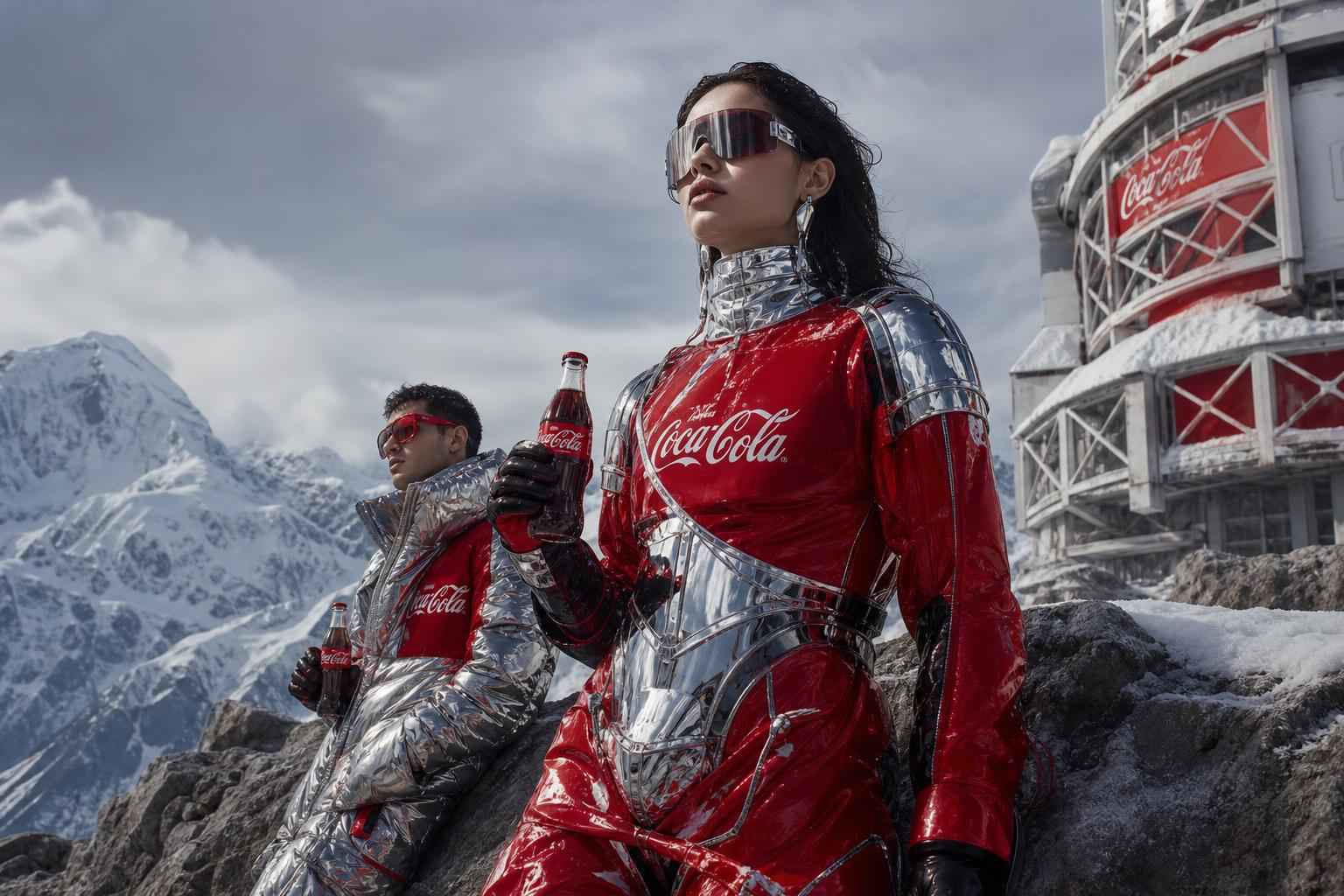
Coca-Cola Marketing Strategy: How to Build Brand Loyalty and Long-Term Customer Demand
Focused keyphrase: Coca-Cola marketing strategy
Related high-search keywords: brand loyalty, customer demand, emotional branding, global marketing strategy, customer retention, brand positioning, long-term growth
Some brands sell products. Others sell identity, belonging, memory, optimism, ritual, and culture. Coca-Cola sits firmly in the second category. It is not just one of the most recognized brands on earth—it is one of the most studied examples of long-term customer demand creation ever built.
If you want to understand how to create brand loyalty that survives changing markets, shifting consumer behavior, new competitors, and even generational changes, then Coca-Cola offers a masterclass. Its strategy is not simply about advertising more. It is about building a brand system so emotionally powerful and commercially consistent that people continue to choose it again and again, often without even thinking.
The real question for ambitious businesses is this: what would happen if your customers felt that strongly about your brand?
Why Coca-Cola Remains a Marketing Benchmark
Coca-Cola has been around for well over a century, yet it continues to adapt without losing its identity. That balance is rare. Most brands drift. They either become stale and predictable, or they chase trends so aggressively that they lose the very qualities customers trusted in the first place.
Coca-Cola avoids both traps by anchoring itself in a few powerful constants: happiness, togetherness, refreshment, optimism, and global familiarity. Around those constants, it evolves packaging, campaign formats, channel strategy, audience targeting, and product innovation.
The brand sells meaning, not just a beverage
This is the first lesson. Coca-Cola does not rely on product features as its central story. It could talk about taste profiles, ingredient sourcing, manufacturing efficiency, or category positioning. Instead, it consistently ties its products to human moments—sharing, celebration, nostalgia, summer, sport, holidays, family, music, and friendship.
That is the difference between a product-led message and a meaning-led brand strategy. One is easy to copy. The other becomes part of culture.
Its scale reinforces trust
There is also a trust effect that comes with familiarity. According to Interbrand’s Best Global Brands, Coca-Cola has long ranked among the world’s most valuable brands. Brand value of that kind does not emerge from awareness alone. It reflects deep market trust, recognition, and sustained preference.
Customers are more likely to choose brands they recognize quickly, feel emotionally safe with, and believe will deliver a consistent experience. Coca-Cola has engineered all three.
The Core of the Coca-Cola Marketing Strategy
1. Radical consistency in brand identity
Think of Coca-Cola and the same cues likely appear almost instantly: red, white script, the iconic bottle shape, the holiday connection, and a familiar emotional tone. This is no accident. It is one of the clearest demonstrations of how distinctive brand assets build memory structures over time.
In practical marketing terms, Coca-Cola makes itself easy to remember and hard to confuse. That has enormous commercial value. Every repeated visual, auditory, and emotional cue reduces friction at the point of purchase.
Brand consistency matters because buyers do not re-evaluate every option from scratch. They use shortcuts. The more recognizable and trusted your brand signals are, the more likely you are to be chosen.
2. Emotional branding that outlasts promotions
A discount can trigger a sale. Emotion can trigger loyalty. Coca-Cola has spent decades creating campaigns that connect with feelings rather than just transactions. Its holiday advertising is a classic example: it does not merely announce availability, it creates anticipation and seasonal association.
The Coca-Cola Company newsroom shows how brand campaigns often center around connection, inclusion, music, shared experience, and optimism. This emotional architecture keeps the brand relevant in ways that tactical promotions alone never could.
“The strongest brands don’t interrupt life—they become part of it.”
Coca-Cola repeatedly places itself inside meaningful moments. That is why customers remember it long after a campaign ends.
3. Omnipresence through distribution
Marketing is not just persuasion. It is also availability. A brand cannot build demand effectively if it is absent when purchase intent appears. Coca-Cola’s distribution strategy is one of the great engines behind its marketing success. It is available across supermarkets, restaurants, entertainment venues, vending channels, convenience stores, and global travel hubs.
This matters because mental availability and physical availability work together. If people think of your brand but cannot access it, demand leaks away. If your product is everywhere but emotionally weak, preference remains shallow. Coca-Cola invests in both sides of the equation.
4. Local relevance within a global system
Another reason Coca-Cola thrives is that it balances global brand management with local adaptation. The brand identity remains recognizable, but execution can flex by market, language, culture, event, or consumer behavior pattern.
That is a sophisticated lesson for any growth-focused business: standardize what makes you memorable, but localize what makes you relevant.
How Coca-Cola Builds Brand Loyalty
Loyalty starts with repeated positive associations
Brand loyalty is often misunderstood. It is not simply a rewards program or a repeat purchase metric. True loyalty is built when customers consistently associate your brand with positive outcomes—whether that is quality, status, reliability, enjoyment, or emotional satisfaction.
Coca-Cola creates those associations through repetition across touchpoints. Packaging, sponsorships, festive campaigns, experiential marketing, partnerships, and retail placement all say the same thing in different ways: this brand belongs in enjoyable moments.
Memory structures matter more than marketers admit
Research from the Kantar brand insights hub and broad brand effectiveness thinking across the industry repeatedly point toward a central truth: brands grow when they are easy to think of and easy to buy. Coca-Cola excels at both.
It has become a default mental option. That is one of the highest achievements in all of marketing. Not because it happened once, but because it was reinforced over decades.
Personalization made the global brand feel individual
One of Coca-Cola’s most memorable modern activations was the “Share a Coke” campaign, which replaced the logo on packs with popular names. The campaign demonstrated something powerful: even the world’s largest brands can feel personal when they invite participation.
Coverage from sources like Campaign and marketing case-study discussions across the industry have pointed to “Share a Coke” as a standout example of how packaging, social sharing, and customer identity can work together.
The lesson here is compelling. Customers do not want to feel marketed at all the time. They want to feel seen.
What Coca-Cola Teaches About Long-Term Customer Demand
Demand creation is not the same as lead generation
Many businesses make a costly mistake: they focus almost entirely on short-term conversion activity. They measure clicks, optimize immediate offers, and squeeze the funnel harder every quarter. That can create revenue bursts, but it does not always build a stronger brand.
Coca-Cola shows the opposite model. It invests in the long game. It creates desire before purchase, relevance before need, and trust before comparison. This is how long-term customer demand compounds.
Broad appeal does not mean bland positioning
Coca-Cola is universally accessible, but it is not generic. It has a clear voice, a recognizable visual world, and an emotional promise that remains coherent over time. This is a crucial insight for growing brands: if you want broader market share, you do not need weaker branding. You need stronger, clearer branding that more people can instantly understand.
Occasion marketing drives repeat demand
Coca-Cola thrives by connecting itself to occasions. Meals. Holidays. Cinema. Sport. Music. Travel. Celebrations. These links create recurring moments of relevance. Instead of waiting passively for a thirsty customer, the brand actively defines when it belongs.
Ask yourself: what occasions does your brand own? If customers cannot easily place your business into a moment, habit, or need state, then long-term demand becomes much harder to sustain.
A Practical Breakdown of Coca-Cola’s Marketing Strengths
| Marketing pillar | What Coca-Cola does well | Business lesson |
|---|---|---|
| Brand identity | Uses highly recognizable colors, typography, packaging, and tone | Create assets people can identify instantly |
| Emotional storytelling | Positions the brand around joy, togetherness, and shared experiences | Sell the feeling, not only the function |
| Distribution | Makes products widely available wherever demand can occur | Availability is a marketing advantage |
| Personalization | Invites participation through campaigns like named packaging | Make the customer part of the story |
| Occasion ownership | Connects the brand to holidays, meals, sport, music, and celebrations | Attach your brand to repeatable moments |
Simple Visual Snapshot
Below is a simple chart-style view of how Coca-Cola’s demand engine works:
| Stage | Main driver | Outcome |
|---|---|---|
| Awareness | Consistent global visibility | High recognition |
| Association | Emotional storytelling | Positive brand memory |
| Availability | Mass distribution | Easy purchase |
| Reinforcement | Repeat occasions and campaigns | Habit and loyalty |
What Businesses Can Apply Right Now
Stop chasing only short-term wins
If every piece of your marketing is asking for the sale today, you may be exhausting demand instead of expanding it. Coca-Cola reminds us that great brands invest in future preference. They do not just capture existing demand—they create it.
Build stronger distinctive assets
Could someone recognize your brand from a color, shape, phrase, design pattern, or tone of voice alone? If not, there is work to do. Distinctiveness helps your brand survive the noise of crowded markets.
Own an emotional space
What do people feel when they think about your business? Confidence? Relief? Aspiration? Joy? Belonging? Momentum? A brand without emotional territory becomes easy to replace.
Map your growth around occasions
Instead of only defining your audience by age, sector, or income, define them by moments. When do they need you? What triggers that need? What routines, frustrations, ambitions, or celebrations could your brand naturally connect to?
Create consistency across every touchpoint
Your website, paid media, packaging, social content, email strategy, and sales presentations should feel like parts of the same brand world. Customers trust what feels cohesive.
“We had marketing activity, but not a true brand strategy. Once we aligned our message, visuals, and customer journey, demand became easier to generate and easier to convert.”
Why This Matters for Your Brand Right Now
Markets are crowded. Attention is expensive. Customer expectations are higher than ever. In that environment, average branding is not simply forgettable—it is costly. If people do not remember you, trust you, or feel anything about you, your acquisition costs rise and your growth becomes fragile.
This is why the Coca-Cola marketing strategy still matters. Not because every company should behave like a global drinks giant, but because the underlying principles work at every scale:
- Be distinctive
- Be consistent
- Be emotionally meaningful
- Be easy to buy
- Be present in repeatable customer moments
That is how brands move from being options to becoming preferences. And from preferences to becoming habits.
Why Not Get the Solution?
If your business wants stronger brand loyalty, more durable customer demand, and a clearer route to long-term growth, then this is the moment to act. Why keep investing in disconnected campaigns if what you really need is a brand system that compounds results over time?
Why settle for marketing that is seen for a second and forgotten by tomorrow?
Why not build something customers recognize instantly, remember emotionally, and return to repeatedly?
The opportunity is not theoretical. It is practical. With the right strategy, positioning, creative direction, and demand-building framework, your brand can become more memorable, more credible, and more commercially powerful.
If you want a brand strategy inspired by what the world’s best marketers do well—without copying them blindly—consider speaking with Brandlab. A sharper brand message, stronger positioning, and more effective demand strategy could change what your market says yes to next.
Final Thought
Coca-Cola’s greatness is not that it became famous once. It is that it kept renewing relevance without surrendering identity. That is the true challenge of modern marketing. Can a brand stay recognizable while staying current? Can it create immediate sales while also building long-term demand? Can it drive reach without losing emotional depth?
Coca-Cola proves the answer is yes.
Now ask the bigger question: what becomes possible when your brand does it too?
If that question matters to you, why not get the solution—and contact Brandlab to start building a brand people remember, choose, and stay loyal to?