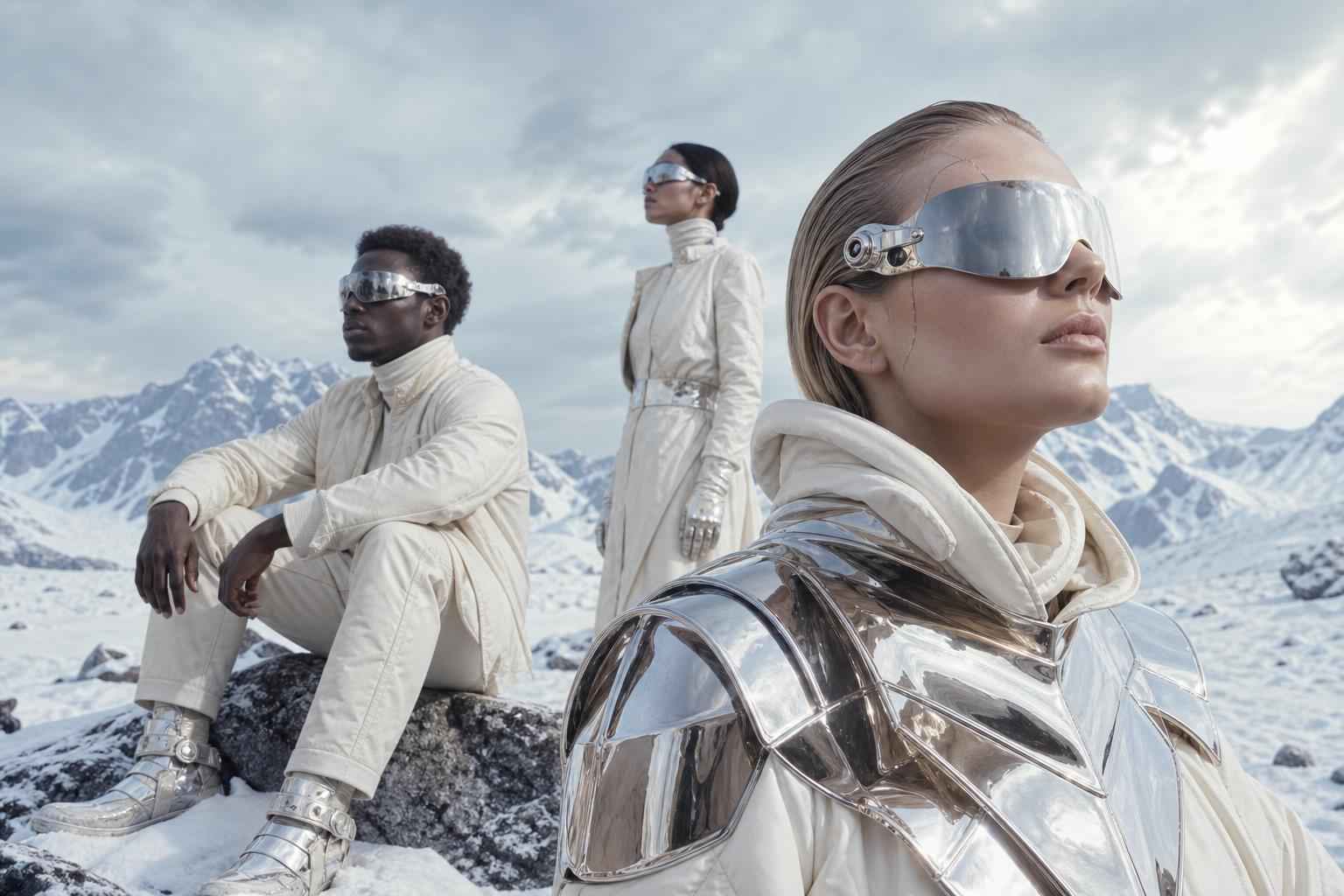
Gemini Creative Agent: Top 5 Tips and Tricks for Images, Video and Multimodal Campaigns
Focused keyphrase: Gemini Creative Agent tips and tricks
If your brand is fighting for attention in a feed full of noise, sameness, and shrinking attention spans, here is the real question: are your campaigns truly built for the way people consume content now?
Modern audiences do not think in channels. They do not separate a static image from a short-form video, a landing page from a product reel, or a search journey from a social click. They move fluidly. They expect speed, relevance, beauty, and usefulness at once. That is exactly why multimodal campaigns matter, and why interest in tools like Gemini Creative Agent is growing so quickly.
Google’s Gemini ecosystem has accelerated the conversation around AI-assisted creativity, planning, ideation, and production. As Google continues to expand Gemini across creative and productivity workflows, marketers are asking a bigger question than “what does this tool do?” They want to know: how do we actually use it to produce image, video, and cross-format campaigns that perform?
This is where smart creative strategy separates itself from generic AI output. Anyone can make content. Far fewer teams can create high-performing visual campaigns that feel original, consistent, and commercially effective.
In this guide, we explore five practical, high-value tips and tricks for using a Gemini-style creative workflow in image, video, and multimodal campaigns. We will also show what is possible when strategy, storytelling, and AI are aligned, and why brands looking to move faster should consider speaking with Brandlab.
Why Gemini Creative Agent Matters in Modern Marketing
The phrase Gemini Creative Agent captures something bigger than a feature set. It represents a shift toward AI systems that can help marketers brainstorm, organize, write, visualize, iterate, and connect ideas across multiple formats. That matters because campaign creation has become more complex than ever.
Today’s best campaigns are no longer single assets. They are systems of content. A hero message may need to become:
- a paid social image series,
- a vertical video cutdown,
- a blog article,
- an email sequence,
- display ad variations,
- landing page visuals,
- search ad copy, and
- sales enablement material.
Managing that complexity manually slows momentum. AI-supported creative workflows can help teams reduce production drag while improving idea exploration.
Google has documented the broader Gemini platform and its multimodal capabilities across text, image, audio, video, and reasoning contexts, which supports why creative professionals are paying such close attention to its role in campaign development. Evidence of Gemini’s multimodal foundation can be explored directly via Google DeepMind and Google’s product documentation:
But technology alone does not create campaign impact. The winning edge comes from how you use it.
Tip 1: Start With a Creative System, Not a Single Asset
The biggest mistake brands make
Too many teams approach AI tools as one-off generators. They ask for “an image,” “a video script,” or “five ad headlines” without first defining the underlying campaign system. The result is fragmented content that looks productive on the surface but lacks cohesion in-market.
If you want stronger results, begin by asking:
- What is the audience tension?
- What emotional response do we want?
- What proof points make us credible?
- What should stay consistent across each format?
- Where do we need variation by platform or audience segment?
This is where a Gemini-style creative workflow becomes far more powerful. Instead of generating isolated outputs, use it to build a campaign framework:
- Core audience insight
- Primary message pillar
- Visual style direction
- Video narrative arc
- CTA hierarchy
- Platform-specific adaptations
Why this approach wins
Consistent campaigns are easier to recognize, easier to remember, and easier to scale. Research from Think with Google has long reinforced the importance of relevant, cohesive creative and audience-aware messaging in stronger campaign performance:
When all assets pull from the same strategic center, your static visuals, short videos, landing pages, and search experiences reinforce one another. That is how multichannel marketing strategy becomes full-funnel momentum.
Tip 2: Use AI for Visual Exploration, Then Add Human Taste
AI can expand possibilities fast
One of the most exciting uses of Gemini-inspired creative assistance is rapid concept exploration. Need three possible aesthetic directions for a campaign? Need contrasting moods for luxury, disruptive, editorial, or performance-led positioning? Need visual language to bridge stills and motion? AI can help teams explore directions faster than traditional early-stage processes alone.
This speed matters. It means a brand can compare:
- minimalist versus maximalist design styles,
- product-led versus people-led imagery,
- cinematic versus native social video framing,
- aspirational versus instructional storytelling, and
- global consistency versus local adaptation.
But here is the truth that experienced creatives already know: speed is not taste.
AI can show what is possible. Humans decide what is meaningful, distinctive, and on-brand.
How to get better image and video outcomes
For stronger visual campaign development, treat generated outputs as creative territory maps, not final answers. Ask deeper questions:
- Does this look like us, or just like AI?
- Is this distinct from competitors?
- Would our best customer stop scrolling for this?
- Does the tone match the buying moment?
- Can the visual concept translate into motion, not just still frames?
Adobe’s research and guidance around generative AI in creative workflows also supports the idea that human refinement remains essential in professional-grade content creation:
A simple image-to-video trick
If you are planning both image campaigns and video campaigns, develop visual prompts and concepts that imply motion from the beginning. Ask for:
- foreground/background separation,
- clear action lines,
- emotional focus points,
- sequential scene potential, and
- narrative continuity.
This makes it easier to take a visual idea into reels, product demos, launch films, and paid video variants later.
Tip 3: Build Multimodal Campaigns Around Customer Intent
Not every asset should do the same job
One reason multimodal campaigns underperform is that brands create content by format rather than by customer intent. They produce an image because they need an image, or a video because video is trending. That is backwards.
Instead, ask what the customer needs at each stage:
| Customer Stage | Best Content Role | Recommended Format |
|---|---|---|
| Awareness | Pattern interrupt and emotional hook | Bold visuals, short-form video, animated social ads |
| Consideration | Clarify value and build trust | Carousels, explainers, landing pages, comparison content |
| Conversion | Reduce friction and create urgency | Product demos, testimonials, offer-driven creatives |
| Retention | Reinforce success and deepen engagement | How-to video, community content, lifecycle email visuals |
This is where Gemini-style assistance shines. It can help map content roles across customer journeys, then draft versions suited to different stages. But the strength comes from assigning each asset a distinct purpose.
Multimodal means connected, not cluttered
A top-performing multimodal campaign does not bombard users with random content types. It creates an intelligent sequence. Someone sees a compelling visual. They watch a short video. They click to a focused landing page. They receive follow-up content that addresses objections. Everything feels coherent.
Google’s emphasis on understanding multimodal information and user context points in the same direction: modern content systems work best when different signals and formats work together, not in isolation. For broader marketing evidence, HubSpot and Think with Google provide useful research on customer journey mapping and content performance:
Tip 4: Treat Video as the Conversion Multiplier, Not Just the Awareness Play
Most brands underuse video after the scroll stop
Video is often treated as a top-of-funnel tactic only. That is a mistake. Yes, short-form video is powerful for grabbing attention. But in many categories, video is also one of the best conversion tools available.
Why? Because video can compress understanding. It can show texture, process, usability, transformation, social proof, and emotion in seconds. It makes the abstract tangible.
Wyzowl’s long-running video marketing reports consistently show how strongly consumers rely on video to understand products and services:
How to use Gemini-led workflows for stronger video
Use AI assistance to structure video production more intelligently:
- Create multiple hook variations for the first 3 seconds.
- Generate audience-specific script angles.
- Turn product features into benefit-led scene outlines.
- Build versioning matrices for paid social, YouTube, web, and email.
- Repurpose long-form narratives into short-form clips.
The key is to move beyond “make one video.” Instead, create a video content system with modular scenes, reusable proof points, and varied CTAs.
What great video campaigns ask
Before finalizing a script or storyboard, ask:
- What is the one sentence a viewer should remember?
- What objection can we remove visually?
- What proof can be shown rather than claimed?
- What cutdown versions will this idea support?
- What happens after the click?
If those questions are not answered, the campaign is not finished.
Tip 5: Use AI to Increase Testing Volume Without Losing Brand Integrity
Testing is no longer optional
The old model of making one polished campaign and hoping it works is becoming less viable. Platforms shift. Audiences fragment. Creative fatigue arrives fast. Winning teams test messages, visuals, hooks, lengths, formats, and CTAs constantly.
AI can make that realistic. It can help generate more variants, faster. But the goal is not to create endless noise. The goal is to create structured creative testing.
Meta and Google both emphasize the importance of testing and creative iteration in digital advertising effectiveness:
A simple testing chart for multimodal campaigns
| Element to Test | Variant A | Variant B | What You Learn |
|---|---|---|---|
| Opening Hook | Problem-led | Outcome-led | What grabs attention fastest |
| Visual Style | Lifestyle imagery | Product-focused imagery | What creates more relevance |
| CTA Language | Learn More | Get the Solution | What drives higher intent |
| Video Length | 15 seconds | 30 seconds | What best balances retention and clarity |
Protect the brand while scaling variation
The smartest use of Gemini Creative Agent workflows is not “more content at any cost.” It is more strategic variation within a clear brand system. That means setting non-negotiables such as:
- tone of voice,
- brand color logic,
- visual composition rules,
- claims compliance,
- approved proof points, and
- CTA hierarchy.
This lets you scale without becoming inconsistent.
What Real Creative Leaders Are Saying
“AI is not the idea. It is the accelerator.”
This reflects the broader direction of the creative industry: tools expand capability, but strategy, taste, and narrative judgment still define the work people remember.
“The future belongs to brands that can turn one powerful idea into many precise expressions.”
That is the essence of multimodal content marketing: not repetition, but intelligent adaptation.
What Is Possible for Your Brand?
Imagine your next campaign launching with:
- high-impact hero visuals that stop the scroll,
- conversion-focused video assets tailored to audience intent,
- platform-specific creative variations for paid and organic channels,
- landing page messaging aligned with visual and motion content, and
- faster testing loops that reveal what really works.
Now ask yourself: why not get the solution?
If your internal team is stretched, if your campaigns feel disconnected, or if you know your brand should be achieving more from image, video, and AI-assisted marketing, there is a smarter next step.
Why Brands Should Speak With Brandlab
Creative technology is only valuable when it drives outcomes
Many businesses are exploring AI. Far fewer know how to turn it into a practical, premium-quality content engine. That is where expert guidance changes everything.
Brandlab can help connect the dots between creative ambition and campaign execution. Instead of experimenting in circles, you can build a strategic system that uses emerging tools like Gemini-style agents to produce better work, faster, and with clearer commercial intent.
The opportunity is not merely to make more assets. It is to create:
- stronger campaign concepts,
- clearer brand storytelling,
- better image and video alignment,
- smarter testing frameworks, and
- more compelling customer journeys.
If your brand wants standout images, video, and multimodal campaigns that turn attention into action, this is the time to get in contact with Brandlab. A fast-moving market rewards brands that act while others are still debating.
Final Thought: The Best Creative Future Is Hybrid
The future of campaign creation will not belong to brands that reject AI, nor to those that use it carelessly. It will belong to brands that pair machine speed with human originality.
That is the promise behind a Gemini Creative Agent mindset. Better idea development. Better workflow speed. Better multimodal coordination. Better creative testing. Better customer relevance.
And in a marketplace where attention is expensive and indifference is everywhere, better is not a luxury. It is the requirement.
So the final question is simple: do you want content, or do you want a campaign system that performs?
If the answer is performance, momentum, and creative that actually moves people, then why wait? Contact Brandlab and start building what is possible.