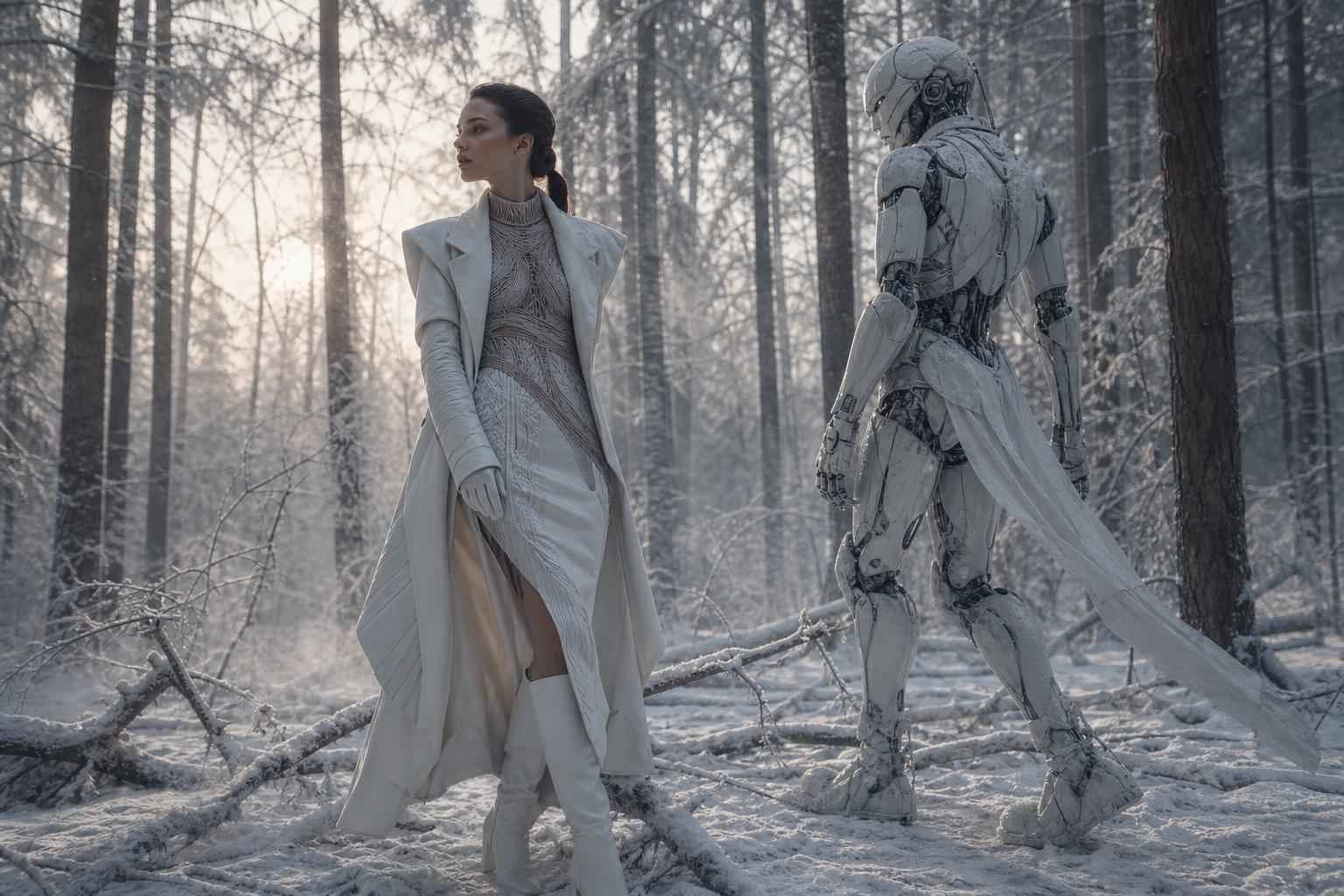
Google Veo Tips and Tricks: How to Write Better Prompts for AI Video
AI video is moving from novelty to competitive advantage. Brands that learn how to prompt well are not just making prettier clips. They are reducing production time, testing ideas faster, improving creative consistency, and opening the door to campaigns that once demanded far larger budgets.
If you want better results from Google Veo or any advanced AI video model, the truth is simple: the quality of the output is often shaped by the quality of the prompt. Better prompts create better scenes, better movement, better storytelling, and better brand alignment.
The opportunity here is massive. Marketers, founders, agencies, and in-house creative teams are asking the same question: how do we get AI video to produce footage that actually feels usable, cinematic, and on-brand?
This is where prompt engineering becomes a strategic skill, not a technical footnote.
According to Google DeepMind’s Veo overview, newer AI video systems are designed to generate high-quality video with improved understanding of cinematic prompts, visual consistency, and control over scenes. That means the people who master prompting will have a very real edge.
So how do you write prompts that turn an AI video tool into a serious creative partner rather than a frustrating experiment?
Why Better Prompts Matter More Than Most Teams Realise
Many people approach AI video with a one-line prompt and then wonder why the result feels generic. A vague prompt like “a futuristic city with people walking” asks the system to invent too many important details at once. The result may be visually interesting, but not necessarily useful.
A strong prompt does something very different. It gives structure to the model’s imagination.
It reduces ambiguity
AI video models respond better when the prompt defines the subject, environment, movement, tone, composition, camera style, and lighting. The more relevant detail you provide, the less the model has to guess.
It improves brand consistency
For businesses, consistency matters. If your brand tone is elegant, minimal, and premium, your prompt should reflect that. If your message is high-energy and youthful, your prompt should communicate that too. Better prompts support a stronger brand identity.
It saves money and time
Every weak output leads to more iteration. Every extra round costs attention, time, and budget. Teams that learn prompt structure early can dramatically reduce wasted experimentation.
The Anatomy of a High-Performing Google Veo Prompt
If you want more cinematic, controlled, and commercially useful AI video, build your prompt in layers. The strongest prompts often include the following:
| Prompt Element | What It Does | Example |
|---|---|---|
| Subject | Defines the main focus | A confident female founder presenting a product |
| Setting | Creates context | In a bright, minimalist design studio |
| Action | Drives motion and narrative | She walks toward the camera and unveils a prototype |
| Camera Direction | Adds filming style | Slow dolly-in shot with shallow depth of field |
| Lighting | Controls mood and realism | Soft morning light with subtle shadows |
| Style | Shapes visual identity | Luxury brand commercial aesthetic |
| Emotion | Guides tone | Inspiring, confident, forward-looking |
Think like a director, not just a user
Prompting for AI video works best when you think in the language of filmmaking. What is the camera doing? What is the subject doing? What kind of atmosphere surrounds them? Is this meant to feel like a documentary, a tech launch, a fashion campaign, or a social-first ad?
The more your prompt sounds like a creative brief or shot list, the more likely it is to generate output with purpose.
Google Veo Tips and Tricks That Instantly Improve Prompt Quality
1. Start with a single clear scene
One of the fastest ways to improve output is to stop overloading the prompt. Instead of asking for five scene changes and three emotional beats in one go, focus on one scene with one strong objective.
For example, rather than:
“Show a startup team building a product, celebrating success, meeting customers, and launching globally.”
Try:
“A startup founder stands in a sleek product lab at sunrise, reviewing a glowing prototype on a glass table, cinematic camera pan, warm golden light, premium tech commercial style.”
This creates a much stronger visual anchor.
2. Use cinematic language deliberately
Words like close-up, wide shot, tracking shot, slow motion, soft focus, and dramatic backlighting can radically improve the sophistication of the output. These are not decorative words. They shape how the model imagines the frame.
Resources like Adobe’s prompt guidance for generative AI reinforce the same principle: specificity helps models perform better.
3. Define the emotional goal
Do you want the audience to feel trust, excitement, nostalgia, urgency, or aspiration? Include that emotional direction. AI video often becomes more coherent when the intended mood is explicit.
Ask yourself: What should this video make someone feel in the first three seconds?
4. Add physical detail
Textures, materials, movement cues, and environmental details matter. A “blue car on a road” is functional but bland. A “metallic blue electric coupe gliding along a rain-slick coastal road at dusk, reflections shimmering on the pavement” gives the model far more to work with.
5. Specify realism versus stylisation
Do you want documentary realism? Hyperreal luxury ad visuals? Anime-inspired motion? Editorial fashion film energy? The distinction matters. Add style signals early in the prompt to guide the generation from the start.
Examples of Weak Prompts vs Better Prompts
Weak prompt example
“A person using AI in an office.”
Why it fails
It is too broad, emotionally flat, visually common, and missing camera direction. The model has no clear sense of intention.
Better prompt example
“A young creative strategist in a modern glass-walled office interacts with an AI-powered holographic interface, medium shot, slow camera orbit, cool blue ambient lighting, sleek premium technology ad aesthetic, subtle reflections, focused and visionary mood.”
Why it works
It includes subject, setting, action, camera movement, lighting, style, and emotional tone. This creates a more professional and visually directed scene.
How Brands Can Use Google Veo for Better Marketing Content
This is where things get exciting. Better prompts do not just make prettier experiments. They can support measurable marketing outcomes.
Product storytelling
Launch teasers, concept films, future-state visuals, and hero shots can all be prototyped quickly with AI video. That helps teams pitch ideas internally and externally with much greater impact.
Campaign previsualisation
Before investing in full production, brands can test visual directions, tones, and narrative angles using prompt-led AI video drafts.
Social content creation
Fast-moving platforms reward velocity. AI video can help marketing teams explore more ideas, create variations, and respond to trends with sharper turnaround times.
Internal innovation
Creative, strategy, and leadership teams can use AI video to communicate possibilities, align stakeholders, and spark new conversations around growth.
According to Think with Google, audiences increasingly expect richer, more engaging digital experiences. AI video, when used strategically, can help meet that expectation at speed.
Focused Keyphrases and High-Search Keywords to Build Around
If you are creating content, campaign pages, or service pages around this topic, these focused keyphrases can help shape your messaging:
- Google Veo tips and tricks
- how to write better prompts for AI video
- AI video prompt examples
- best prompts for cinematic AI video
- Google Veo prompt guide
- AI video for marketing
- prompt engineering for AI video
- how to create brand videos with AI
Why these keyphrases matter
They connect with what people are actively searching for: practical guidance, usable examples, and business application. But ranking is only part of the story. The bigger win is relevance. If your content answers the searcher’s real question, it has a stronger chance of converting attention into action.
Prompt Formula You Can Use Again and Again
Here is a simple formula that works surprisingly well:
[Subject] + [Action] + [Setting] + [Camera Direction] + [Lighting] + [Style] + [Mood]
Example formula in action
“A sustainability-focused fashion founder adjusts a tailored jacket on a mannequin in a calm, sunlit atelier, close-up transitioning to a medium tracking shot, soft natural window light, editorial luxury campaign style, refined and hopeful mood.”
This framework provides order without killing creativity.
What Experts Keep Saying About Prompting
Creative observation: “The best generative outputs usually come from the clearest intent, not the longest prompt.”
Strategic reality: “AI speeds up production, but direction still defines quality.”
What this means for brands: Teams that treat prompting as a core marketing skill will outperform teams that treat it like a novelty tool.
A Simple Performance Chart: What Improves AI Video Output Most?
| Prompt Feature | Impact on Quality | Why It Matters |
|---|---|---|
| Specific subject description | High | Creates immediate visual clarity |
| Camera direction | Very High | Makes footage feel intentional and cinematic |
| Lighting details | High | Shapes realism and atmosphere |
| Mood or emotion | Medium to High | Improves narrative coherence |
| Too many ideas in one prompt | Negative | Causes inconsistency and confusion |
Common Mistakes to Avoid When Prompting AI Video
Being too vague
If the prompt could describe a thousand different videos, it is probably too broad.
Adding conflicting styles
“Luxury realism, cartoon energy, gritty documentary, and dreamy fantasy” may sound creative, but it often produces visual confusion.
Ignoring movement
Video is not a still image. If nothing moves with intention, the clip often feels lifeless. Mention gestures, camera motion, environmental movement, or transitions.
Forgetting the audience
Who is the video for? Investors? Consumers? Social scrollers? B2B buyers? Different audiences need different emotional and visual cues.
What Is Possible for Businesses That Get This Right?
Imagine being able to test ten campaign directions before lunch. Imagine turning strategic ideas into visual artefacts that clients, stakeholders, or leadership can react to immediately. Imagine shrinking the distance between concept and execution.
That is the real promise of AI video.
And here is the bigger question: if your competitors are learning this now, how long do you want to wait?
Why settle for average outputs when better prompts can unlock stronger storytelling, faster marketing production, and more persuasive brand content?
Why Smart Teams Should Talk to Brandlab
The challenge is not access to tools. The challenge is knowing how to use them strategically.
That is where Brandlab can make the difference. If your team wants AI video content that aligns with business goals, brand identity, audience psychology, and creative quality, you need more than scattered experimentation. You need a partner who understands brand, messaging, content performance, and what makes audiences say yes.
What Brandlab can help you explore
- AI video strategy for campaigns and brand growth
- Prompt development for better visual output
- Creative direction that aligns AI content with your identity
- Content systems that scale quality, not just quantity
- Innovation workshops to help your team adapt faster
Do you want your AI video to look like experimentation, or do you want it to look like leadership?
Do you want prompts that produce generic visuals, or prompts that create commercial potential?
Do you want to watch this evolution happen, or shape it?
Final Thoughts: Better Prompts Create Better Possibilities
Google Veo tips and tricks are not really about tricks at all. They are about disciplined creativity. The strongest prompts combine clarity, intention, style, and emotional intelligence. They guide the model like a director guides a scene.
The teams that learn this fastest will not just generate better clips. They will tell better stories, move faster, test smarter, and create content experiences that feel more premium, persuasive, and memorable.
AI video is here. The real question is not whether it matters. The question is whether your prompts are strong enough to make it matter for your brand.
If you are ready to turn possibility into performance, contact Brandlab and start building AI video content that actually works.