How Barbie’s Marketing Machine Turned a Movie Launch Into a Global Brand Economy
Focused keyphrase: Barbie movie marketing strategy
Related high-search keywords: brand marketing campaign, experiential marketing, pop culture branding, movie promotion strategy, global brand partnerships, viral marketing campaign, consumer brand engagement
Some campaigns sell a product. Some create a moment. And then, once in a generation, a campaign comes along that does something much bigger: it builds a cultural economy around an idea and makes the world want in.
That is exactly what happened with Barbie.
The launch of Barbie, directed by Greta Gerwig and released by Warner Bros. in 2023, was not merely a film release. It became a case study in modern brand amplification, a lesson in how storytelling, partnerships, design, social media, nostalgia, and audience psychology can combine to deliver a commercial event that transcends entertainment. The campaign didn’t just promote tickets. It activated conversations, loyalty, aesthetics, fashion, user-generated content, licensing, PR, and retail demand across markets.
In short, Barbie became more than a movie. It became a global brand economy.
Barbie’s success was not powered by one advert, one trailer, or one celebrity appearance. It was the compounding force of brand world-building. People were not simply invited to watch a film. They were invited to wear it, post it, visit it, joke about it, debate it, and buy into it.
Why the Barbie Campaign Mattered Far Beyond the Box Office
Great marketing is often recognised by one simple sign: it changes behaviour. The Barbie campaign changed consumer behaviour at scale. It made pink a media event. It drove shoppers into stores. It encouraged people to plan themed outings. It inspired brands across industries to attach themselves to the energy of the launch. And it achieved what every ambitious business wants: attention that converts into action.
According to Box Office Mojo, Barbie grossed more than $1.4 billion worldwide, making it one of the biggest global film releases of the year. But those figures alone do not tell the whole story. The real significance lies in how the campaign leveraged cross-category visibility, from fashion and beauty to hospitality and homeware, creating a halo effect that reached far beyond cinema.
The film became a platform, not just a product
Most promotional campaigns orbit around a release date. Barbie’s orbit was much wider. It turned the film into a platform for collaboration and participation. Research and reporting from outlets including The New York Times, Vogue, and Forbes highlighted the sheer scale of tie-ins, cultural conversation, and earned media generated by the campaign.
That matters because businesses today face a crowded, distracted market. Consumers do not simply want a message. They want relevance, belonging, and shareable meaning. Barbie delivered all three.
The Engine of Success: A Marketing Ecosystem Built for Virality
What made the Barbie movie marketing strategy so potent was not just budget. Budget helps, of course. But budget alone does not guarantee obsession. The secret was ecosystem thinking.
Every tactic reinforced another. Press amplified partnerships. Partnerships amplified social media. Social media amplified visual identity. Visual identity amplified consumer participation. The audience effectively became part of the media spend.
It had an instantly recognisable visual language
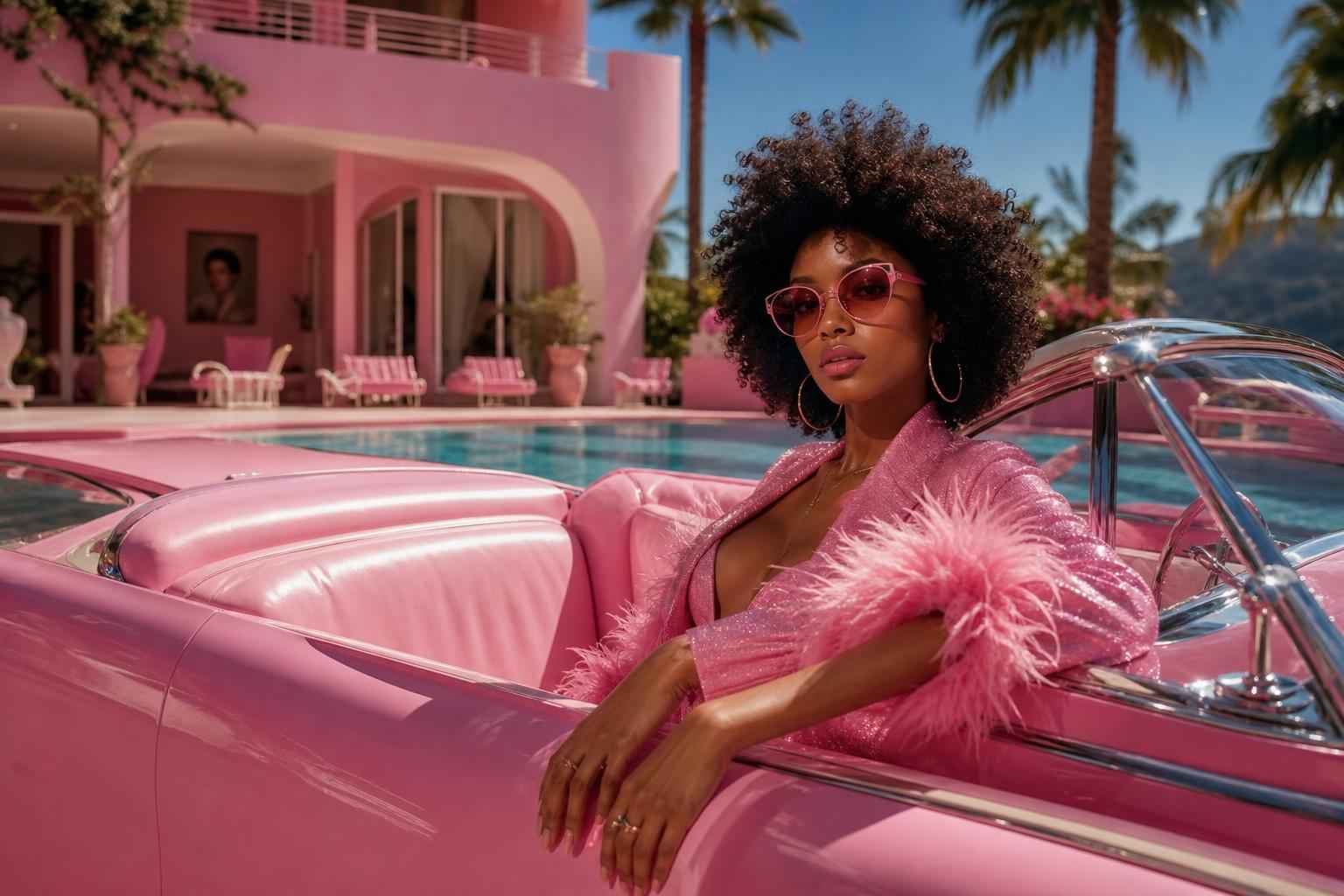
Brand recognition lives and dies on consistency. Barbie’s use of pink, glossy dream-world sets, retro iconography, and highly stylised typography gave the campaign an unmistakable signature. In a scroll-heavy environment, that matters. Recognition is the first victory.
The visual language was not subtle. It was deliberately ownable. Whether someone saw a poster, a meme, a fashion collaboration, or a red-carpet image, they knew immediately what it was connected to. This created a high-frequency memory loop that strengthened recall and encouraged repetition online.
It offered emotional contrast: nostalgia and irony
Barbie appealed across generations because it balanced two emotional triggers at once. First, nostalgia: many audiences already had a relationship with the brand from childhood. Second, self-aware humour: the campaign knew how to wink at itself, making it culturally current rather than stuck in the past.
This combination widened the audience. Long-time fans felt seen. Newer audiences felt invited. Sceptics felt curious. Marketers should take note: when a campaign can hold sincere affection and cultural wit in the same frame, it dramatically increases shareability.
“The genius of Barbie wasn’t just awareness. It was participation. People didn’t feel targeted by the campaign — they felt recruited into it.”
The Power of Brand Partnerships: Barbie Everywhere, All at Once
If there was one unmistakable signal that Barbie had moved beyond movie marketing, it was the wave of brand collaborations. Airbnb created a Barbie Dreamhouse stay. Fashion labels, beauty brands, food companies, and retailers all found ways to connect to the launch. According to Airbnb News, the Malibu DreamHouse activation offered fans an immersive encounter with the Barbie world. It was not passive advertising. It was an experience designed for content creation and emotional immersion.
Partnerships multiplied relevance
Here is the strategic brilliance: every collaboration allowed Barbie to enter a new category with borrowed credibility and fresh audience reach. In one move, the campaign could become fashion news, travel news, beauty news, retail news, and social media entertainment.
That is how a launch becomes an economy. The intellectual property stops functioning as a single asset and starts functioning as a commercial ecosystem.
The campaign lowered the cost of attention
In an age where paid reach can be expensive and fragile, partnerships extend visibility organically. They create moments worth covering. Journalists write about them. Creators document them. Consumers share them. The result is a more efficient attention model, where earned media and social proof carry the message further.
| Marketing Element | Why It Worked | Brand Lesson |
|---|---|---|
| Visual Identity | Instant recognition across every channel | Own a clear and unforgettable aesthetic |
| Brand Collaborations | Expanded cultural and commercial reach | Use partnerships to create audience overlap |
| Social Media Memes | Made sharing easy and low-friction | Build campaigns people can remix |
| Experiential Activations | Created real-world immersion and press value | Turn audiences into participants |
How Social Media Turned Barbie Into a Behaviour, Not Just a Conversation
Social media did not simply spread the message. It changed the format of the campaign itself. Audiences created outfit videos, parody clips, themed photography, office takeovers, beauty tutorials, friendship content, and event invites. The campaign became a script for personal expression.
User-generated content became unpaid distribution
When people post a campaign voluntarily, they are doing more than sharing. They are endorsing. They are personalising. They are validating the brand to their own networks. That kind of attention is often more trusted than direct advertising.
Barbie understood that audiences love templates. The character posters and the viral poster generator gave people a simple way to enter the campaign world. This was not accidental. It was smart design. Remove friction, and participation rises.
The internet loves a clear symbol
Pink became shorthand. The campaign gave the internet a simple symbol with near-universal recognisability. Strong campaigns often have this quality: they can be compressed into one colour, one phrase, one scene, one visual cue. Barbie owned pink in the cultural conversation for months.
If your audience cannot easily remake your campaign in their own voice, you may be limiting your reach. The most effective modern campaigns are not just watched. They are recreated.
What Business Leaders Should Learn From Barbie’s Cultural Dominance
It is tempting to look at Barbie and say, “Of course it worked. It is a famous brand.” But that misses the point. Famous brands fail all the time. Legacy does not guarantee relevance. Barbie worked because the launch strategy was built around cultural behaviour, not just brand history.
Lesson one: build a world, not a message
Consumers are exhausted by one-dimensional promotion. They respond better to universes they can step into. Barbie constructed a world with rules, textures, jokes, products, references, and emotional tones. That world was coherent enough to feel premium and flexible enough to invite participation.
Lesson two: make your audience feel smart
People like campaigns that reward them for getting the reference. Barbie balanced broad appeal with layers of meaning. It welcomed mass audiences while leaving room for commentary on gender, identity, nostalgia, and image. That made the campaign feel richer than standard commercial promotion.
Lesson three: design for earned media from the start
Too many businesses still think of PR, social, partnerships, content, and creative as separate lanes. Barbie showed what happens when they move together. The campaign looked like one integrated idea expressed in many forms. That integration is where momentum comes from.
The Numbers Tell a Story—But the Real Victory Was Perception
Financial success matters, and on that front Barbie was formidable. Yet the more profound outcome was symbolic. It repositioned Barbie in public consciousness. As reporting from Variety and BBC News showed, the film became a landmark entertainment event. But perception is where the long-term value lies. The campaign made Barbie feel current, intelligent, fashionable, ironic, emotionally resonant, and commercially magnetic—all at once.
Perception changes future revenue
When a campaign upgrades how people feel about a brand, the impact can outlast the original launch. It influences future collaborations, licensing opportunities, retail performance, media interest, and category expansion. That is why the phrase global brand economy fits so well. The movie was the spark. The economy was the fire.
A Quick Visual Snapshot of the Barbie Effect
Brand Awareness      ████████████████████
Social Conversation  ██████████████████████
Partnership Reach    ███████████████████
Audience Participation █████████████████████
Cultural Relevance   ██████████████████████
This chart is illustrative rather than statistical, but it captures the strategic truth: Barbie was not strong in one area. It achieved force across every layer of modern marketing.
So, What’s Possible for Your Brand?
This is the question worth asking.
If a campaign can turn a film into a global consumer event, what could the right strategy do for your business? What would happen if your brand stopped thinking in isolated deliverables and started thinking in ecosystems? What if your next launch did more than announce something—what if it activated a movement around it?
Could your customers become advocates? Could your visual identity become instantly recognisable? Could your campaign earn media instead of only buying it? Could partnerships place you inside conversations you do not currently own? Could your brand become the thing people choose to talk about, not the thing interrupting what they were already doing?
Why not get the solution?
Because this is not just for billion-dollar toy brands or Hollywood studios. The principles behind Barbie’s success are transferable. Clear identity. Cultural timing. Participation-first design. Smart collaboration. Emotional relevance. Strategic consistency. Those are not fantasy ingredients. They are practical levers for ambitious businesses willing to think bigger.
“The brands that win today are not just visible — they are culturally useful. They give people something to feel, share, and belong to.”
Why Brandlab Should Be Part of That Conversation
If your business is serious about growth, then your marketing cannot afford to be generic, fragmented, or forgettable. You do not need more noise. You need strategic brand momentum. The kind that sharpens your positioning, aligns your channels, and creates campaigns with the power to move markets—not just decorate feeds.
Brandlab can help turn attention into commercial energy
The lesson from Barbie is not “make everything pink.” It is this: build a brand people want to enter. That takes insight, creative discipline, market awareness, and execution that works across digital, social, content, partnerships, and design.
That is where Brandlab comes in.
Whether you need a high-impact campaign, a stronger brand identity, better audience engagement, or a launch strategy that creates measurable traction, there is enormous value in speaking with a team that understands how modern brands grow. Not through disconnected output, but through connected thinking.
Ask yourself the harder question
Not “Can we afford to invest in better branding and marketing?”
Ask instead: Can we afford to stay ordinary while louder, smarter, more culturally aware competitors take the attention that should have been ours?
The businesses that lead categories are rarely the ones waiting for certainty. They are the ones creating momentum.
Final Thought: Barbie Proved That Marketing Can Still Surprise the World
For all the talk about short attention spans and saturated media, Barbie proved something deeply encouraging: people are still hungry for campaigns with imagination. They still respond to bold creative decisions. They still reward brands that understand culture instead of simply advertising into it.
That should excite every ambitious business leader.
Because if one movie launch can become a global brand economy, then your next campaign does not have to settle for being simply “seen.” It can be discussed. Shared. Remembered. Desired. Chosen.
And if you are ready to build that kind of momentum, this is the moment to get in contact with Brandlab.
Why not get the solution? Your audience is out there. The opportunity is real. What is possible for your brand may be far bigger than you think.