How Barbie’s Marketing Machine Turned a Movie Launch Into a Global Brand Economy
Focused keyphrase: Barbie movie marketing strategy
SEO keywords: Barbie marketing campaign, brand collaborations, experiential marketing, cultural marketing strategy, movie launch campaign, global brand economy, integrated brand marketing, Brandlab marketing agency
Some campaigns sell a product. Some campaigns sell a moment. And then, once in a rare while, a campaign does something far bigger: it sells a feeling, a conversation, a colour palette, a social identity, and a reason for millions of people to participate all at once.
The Barbie movie marketing campaign did exactly that.
It was not simply a film release. It became a masterclass in brand storytelling, cultural relevance, and commercial ecosystem design. In a marketplace where attention is fragile, fragmented, and expensive, Barbie didn’t just “cut through.” It became the culture. Pink flooded feeds, fashion, retail, travel, beauty, memes, UGC, and media headlines. People did not merely watch the campaign. They joined it.
That is the central lesson for modern brands: the most successful launches are no longer campaigns in the old sense. They are brand economies—layered systems of content, partnerships, social signals, PR moments, customer participation, and commercial touchpoints, all reinforcing one another.
If you are a brand leader, founder, marketer, or growth team asking what modern relevance actually looks like, this case is impossible to ignore. More importantly, it offers a blueprint. One that ambitious brands can adapt, scale, and own.
Why This Campaign Felt Bigger Than Advertising
It transformed promotion into participation
Most launch campaigns still operate on an outdated model: create assets, buy media, push messaging, and wait for results. The Barbie campaign flipped that logic. It invited audiences to co-create the momentum. Consumers took photos, wore themed outfits, planned events, recreated visuals, debated meaning, and amplified the message willingly.
That is what made it powerful. The campaign did not feel like interruption marketing. It felt like an open cultural invitation.
And in a time when people are increasingly resistant to traditional advertising, that distinction matters. Consumers are not asking for more noise. They are asking for more meaning, more play, more relevance, and more social currency. Barbie delivered all four.
It connected nostalgia with modern identity
The campaign drew from decades of built-in awareness around Barbie as an iconic brand, while reframing it for a new era. Nostalgia brought older audiences in. Bold design, self-aware humour, feminism debates, fashion energy, and meme culture carried it forward for newer ones.
That balance is highly sophisticated. Too much nostalgia and a campaign feels backward-looking. Too much reinvention and it loses recognisability. Barbie found the tension point where legacy and now could thrive together.
This is one of the strongest lessons for brands with heritage: your past is useful, but only if it is reinterpreted through current culture.
Why that matters: The most effective campaigns are no longer just broadcast systems. They are participation systems.
The Engine Behind the Hype: A Fully Integrated Brand Ecosystem
Partnerships turned the campaign into a retail and lifestyle takeover
One of the most discussed aspects of the Barbie campaign was its sheer volume of collaborations. Brand partnerships appeared across categories including fashion, interiors, beauty, food, travel, and lifestyle. According to reporting from The New York Times, the scale of the collaboration network was extraordinary, turning the release into a near-inescapable presence in culture.
This matters because collaborations were not just decorative extras. They extended the brand into everyday life. Consumers could wear Barbie, eat Barbie-themed products, stay in Barbie-inspired spaces, and post their own version of the aesthetic. The campaign entered the physical world, which amplified its visibility and emotional texture.
That is how a launch becomes a global brand economy. It creates multiple doors into the brand. Not everyone buys a cinema ticket first. Some engage through fashion. Others through social content. Others through themed pop-ups. Others through press coverage. Great campaigns reduce the distance between awareness and participation.
The visual system was instantly ownable
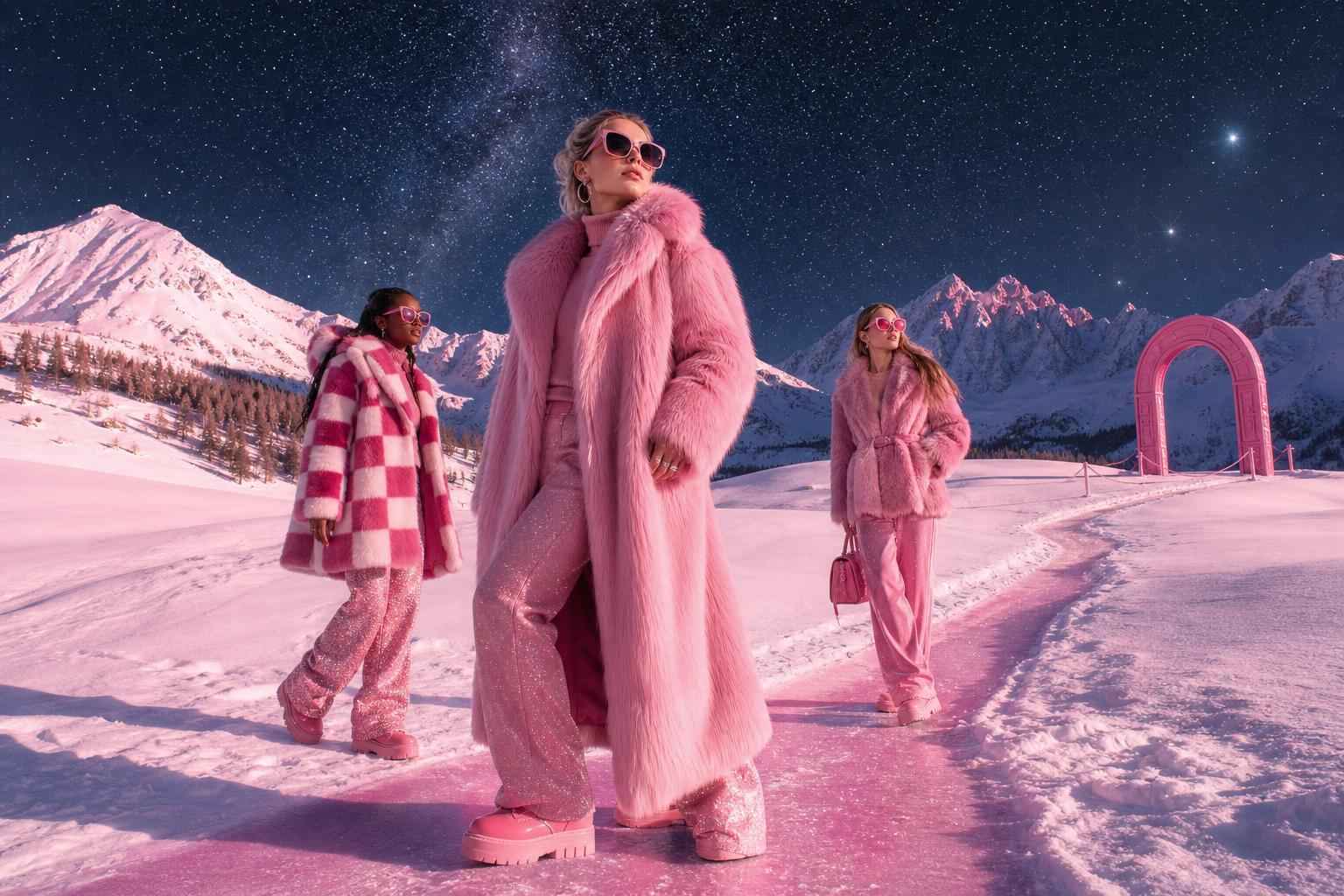
The campaign’s visual language deserves serious attention. Pink became more than a colour. It acted as a cultural trigger. Fonts, framing, product photography, styling, outdoor placements, and digital executions all felt immediately identifiable. Even content made by fans looked connected to the original system.
That degree of consistency is not accidental. It is strategic design discipline.
Brands often underestimate this point. Distinctive assets are not surface-level choices. They are memory structures. The more recognisable your visual world, the easier it is for people to notice, remember, and remix your brand in public.
PR, social, and commerce were aligned
Many brands say they are integrated. Few actually are. Barbie was. Press coverage fuelled social chatter. Social chatter drove trend reporting. Trend reporting increased urgency. Collaborations made the campaign shoppable. The film gave everything a narrative centre. Every moving part reinforced every other moving part.
Warner Bros. and partner brands did not create isolated tactics. They created a marketing flywheel.
That is what makes this campaign especially important to study. It was not successful because of one clever ad. It was successful because every channel made every other channel stronger.
Barbie’s Marketing by the Numbers
Below is a simplified view of why the campaign reached escape velocity.
| Marketing lever | What Barbie did | Strategic effect |
|---|---|---|
| Distinctive branding | Used instantly recognisable pink visuals and playful identity assets | Improved recall, sharing, and cultural visibility |
| Brand collaborations | Expanded into fashion, beauty, travel, food, and lifestyle | Turned awareness into commercial participation |
| Social amplification | Created meme-ready moments and UGC-friendly aesthetics | Lowered resistance and increased voluntary reach |
| Experiential marketing | Brought the world of Barbie into offline experiences | Deepened emotional engagement |
| Narrative tension | Balanced irony, empowerment, nostalgia, and curiosity | Expanded audience relevance across demographics |
For evidence of the film’s extraordinary commercial performance, see Box Office Mojo’s Barbie totals and wider analysis from Variety. These outcomes did not emerge from media spend alone. They were driven by cultural saturation and a brilliantly orchestrated brand system.
What Made the Campaign Emotionally Intelligent
It understood that audiences want to signal identity
Modern consumers do not just buy things because of utility. They buy, post, attend, wear, and endorse things that say something about who they are—or who they want to be seen as.
The Barbie campaign gave people a complete vocabulary of expression. Dressing in pink, sharing a poster generator image, going to screenings in themed outfits, and discussing the film online all became acts of identity performance. That made engagement visible, social, and contagious.
Ask yourself: does your brand currently offer people a way to express something about themselves? Or are you simply asking them to consume?
It made room for conversation, not just celebration
A less confident brand would have played everything safely. Barbie did not. It allowed room for analysis, debate, humour, and interpretation. That expanded the campaign’s lifespan. Media outlets covered not just the launch, but the ideas around it. Academic, cultural, and opinion-driven conversations helped the campaign stay alive far beyond traditional opening-week publicity.
According to coverage from Adweek, the campaign became one of the year’s most inescapable brand presences. That kind of saturation happens when brand activity feeds discussion rather than trying to control it too tightly.
Lessons Every Ambitious Brand Should Steal
1. Build a world, not a one-off campaign
If you want outsized results, stop thinking only in terms of assets and channels. Start thinking in terms of worlds. What does your brand look like, sound like, believe in, invite, and enable? What can people do inside it? How can partners extend it? How can customers make it visible?
Barbie succeeded because it offered a fully articulated world. Your brand does not need Hollywood scale to do the same in principle. It needs clarity, coherence, and courage.
2. Make your brand easy to join
The best marketing lowers the barrier to participation. Barbie gave people templates, aesthetics, themes, shareable cues, and instant recognisability. It was easy for consumers, creators, media, and partner brands to plug in.
That raises a crucial question: are you making your brand too hard to engage with? Too abstract? Too corporate? Too generic?
Participation is a design challenge. Brands that solve it grow faster.
3. Create commercial touchpoints beyond the core product
The film was the anchor, but monetisation and visibility spread far beyond cinema. This is where so many brands underperform. They think too narrowly about what they sell. The smartest businesses understand they are not just selling a product. They are selling access to an idea, a mood, a lifestyle, a community, a status marker, or a transformation.
What adjacent categories could your brand credibly enter through partnerships, content, licensed experiences, or capsule collaborations?
4. Give people a reason to talk about you in public
It is not enough to be liked privately. Modern brands win when they are shareable publicly. Barbie was built for public visibility. That is one reason it exploded.
Can your customer show participation? Is there a photo moment? A statement? A symbol? A social behaviour attached to your offer?
If not, why not get the solution?
What This Means for Your Brand in 2026 and Beyond
Attention is no longer bought once
You can still buy reach. But you cannot buy significance the same way. Significance comes from the interaction between strategy, creative distinctiveness, cultural timing, and audience behaviour. The brands that outperform now are the ones that understand how these forces connect.
Barbie shows that a launch becomes exponentially more valuable when it creates earned conversation, partner amplification, and consumer-led distribution. That is what a modern integrated marketing strategy should aspire to do.
Category leaders behave like media brands
Another major lesson here is that today’s best brands act like publishers, entertainment companies, and community builders at the same time. They create stories, not just sales messages. They design moments, not just placements. They understand that visibility is strongest when content, PR, partnerships, and performance marketing are aligned under one compelling idea.
If your business still treats these functions separately, you are likely leaving growth on the table.
A Simple Chart: From Movie Launch to Brand Economy
| Stage | Audience response | Business result |
|---|---|---|
| Awareness | People notice the distinctive pink creative and press buzz | High visibility |
| Interest | Audiences engage with trailers, memes, and conversation | Organic social lift |
| Participation | People dress up, share content, buy collabs, join events | Brand ecosystem expansion |
| Conversion | Consumers purchase tickets and partner products | Revenue growth |
| Legacy | Campaign becomes a benchmark in modern marketing | Long-term brand equity |
Where Brandlab Comes In
Strategy is the difference between visibility and velocity
Plenty of brands want a “Barbie moment.” Very few are architected to create one.
This is where Brandlab can make the difference. Because breakthrough growth does not come from copying surface-level trends. It comes from building the right strategic foundation: a sharper proposition, a more ownable brand world, better creative systems, stronger campaign integration, and a clearer pathway from attention to action.
Whether you are launching a new offer, repositioning an established business, scaling an e-commerce brand, or trying to become more culturally relevant, the challenge is the same: how do you create marketing people do not just see—but want to join?
Brandlab helps brands answer that question with intelligence, imagination, and commercial clarity.
That’s the opportunity: If your marketing is not creating momentum, it may not need more output. It may need a better system.
What is possible for your business?
Imagine your next campaign doing more than generating impressions.
- Imagine it becoming a recognisable visual movement in your category.
- Imagine it opening new collaboration opportunities.
- Imagine customers sharing it because it reflects their identity.
- Imagine press, social, paid, experiential, and conversion all working together rather than pulling apart.
- Imagine your launch becoming a growth engine rather than a short-lived spike.
That is not fantasy. That is what strategic brand building can do.
The Real Question: Why Not Get the Solution?
Your audience is already telling you what modern marketing needs to be
People want relevance. They want emotion. They want participation. They want stories with shape, brands with confidence, and campaigns that feel worth talking about.
Barbie understood this. It turned a movie release into a global brand economy by aligning creativity, commerce, culture, and community. That was not luck. That was design.
So here is the question every ambitious business should ask: if this is what modern brand growth looks like, why settle for fragmented marketing that no one remembers?
Why not get the solution?
If your business is ready to build sharper positioning, stronger campaigns, and a brand people actively want to engage with, it is time to contact Brandlab. A better strategy can change how your audience sees you. A great one can change how your market behaves around you.
Contact Brandlab and start building the kind of campaign that people do not just notice—they say yes to.
Further Reading and Research Evidence
- The New York Times: Barbie’s marketing and collaboration scale
- Adweek: How Barbie became one of the year’s most inescapable brands
- Variety: Barbie’s record-breaking box office performance
- Box Office Mojo: Barbie box office data
- Warner Bros.: Official Barbie movie page
In the end, the genius of Barbie’s campaign was not that it was loud. It was that it was legible, shareable, commercially expandable, and emotionally tuned to the moment. That is what brand leadership looks like now. And for businesses willing to think bigger, that is exactly what is possible next.