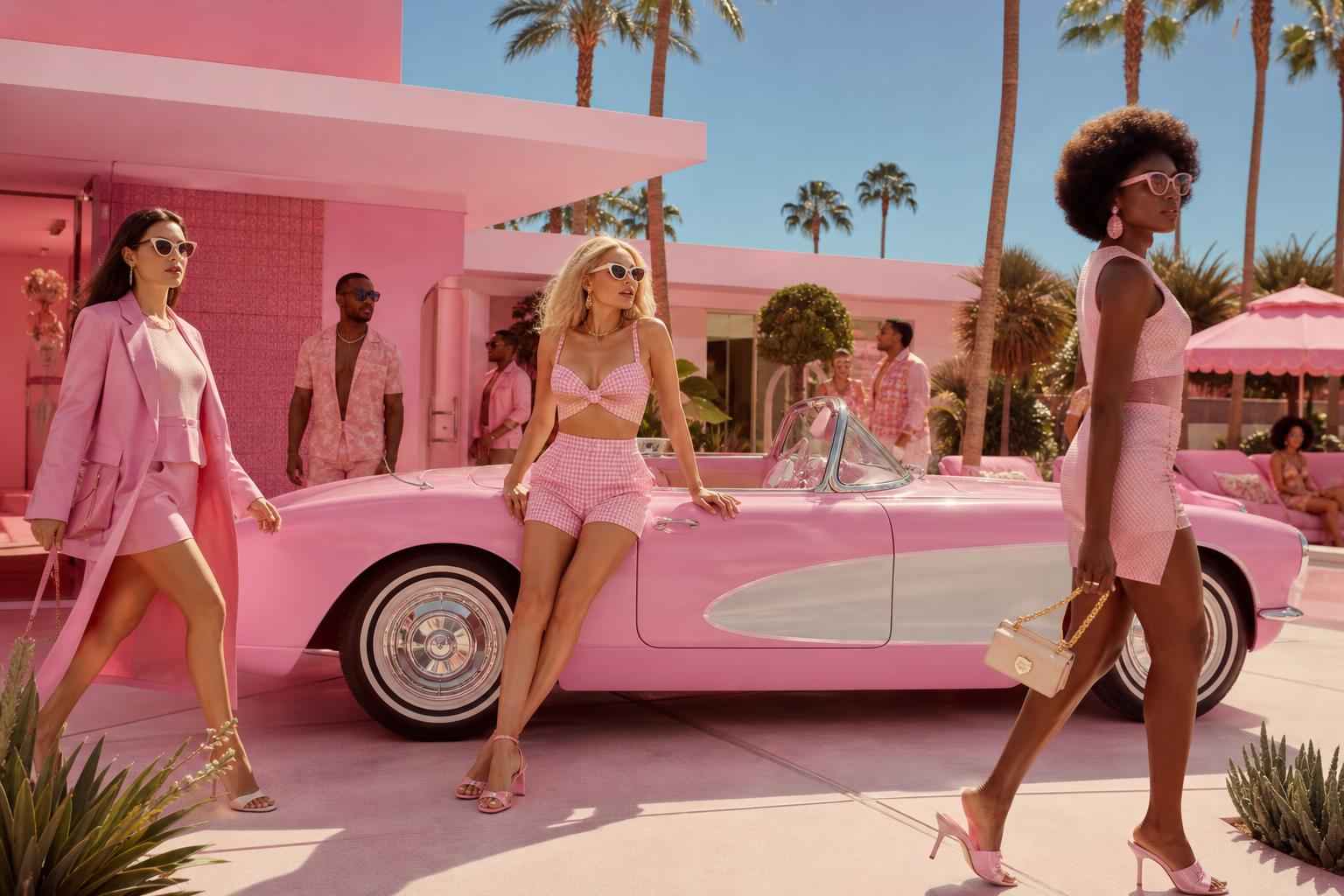
How Barbie’s Marketing Machine Turned a Movie Launch Into a Global Brand Economy
Some campaigns sell a product. Some campaigns sell a moment. And then there are the rare, world-shaping brand events that do something much bigger: they create a cultural economy of their own. The Barbie movie marketing campaign did exactly that.
What happened around Barbie was not simply a successful film release. It was a masterclass in integrated marketing, brand storytelling, cultural relevance, and commercial ecosystem design. It moved far beyond trailers, posters, and red carpets. It became pink-saturated proof that when a brand truly understands attention, emotion, participation, and timing, it can create an experience so magnetic that audiences become marketers, retailers become amplifiers, and the internet becomes the media plan.
For brand leaders, founders, marketers, and growth teams, the question is not just “Why did Barbie work?” The better question is: what becomes possible when your brand stops running campaigns and starts building worlds?
This is where the story gets exciting. Because Barbie’s marketing machine turned a movie launch into a global brand economy—and for businesses looking to create relevance, demand, and long-term equity, there are lessons here that are impossible to ignore.
The Campaign That Refused to Behave Like a Typical Movie Launch
The standard movie marketing formula is familiar: teaser trailer, cast interviews, social content, publicity circuit, opening weekend push. The Barbie movie campaign took those fundamentals and stretched them into something larger, more participatory, and commercially inventive.
Instead of positioning the film as just another summer blockbuster, Warner Bros. and its partners transformed it into a full-spectrum cultural happening. Consumers did not merely see promotions for Barbie. They encountered Barbie in fashion, beauty, travel, home design, food, social media filters, brand partnerships, memes, events, and editorial coverage. The film was everywhere because the campaign understood one truth better than most brands do: attention compounds when people can enter the story from multiple directions.
From media campaign to cultural infrastructure
One of the smartest aspects of the campaign was how decisively it moved beyond paid media. Partnerships with dozens of brands expanded Barbie’s visibility in ways traditional advertising could never achieve on its own. Airbnb created a Barbie Dreamhouse-inspired stay. Beauty, fashion, and lifestyle collaborations multiplied touchpoints. Social media users generated endless waves of user-created content. The campaign became less about broadcasting and more about building a vibrant, self-sustaining network.
This made the launch feel less like promotion and more like participation. People were not simply being told to watch a movie. They were being invited to wear it, joke about it, photograph it, remix it, and live inside its aesthetic language.
That distinction matters enormously in modern marketing.
Why Barbie Worked So Powerfully in a Crowded Attention Economy
Today’s brands are not only competing for sales. They are competing for mental availability, emotional resonance, and cultural memorability. That is a much tougher game. Consumers scroll fast, forget faster, and filter most marketing out before it has a chance to land.
So why did Barbie cut through?
It weaponised recognisable brand memory
Barbie is one of the most recognisable brands in the world. That legacy provided decades of visual codes, emotional associations, and global recognition. But legacy alone is never enough. In fact, heritage brands often struggle because they become trapped by their own past.
Barbie succeeded because it used familiarity as a launchpad, not a limitation. The campaign drew on nostalgia, but it also refreshed the brand’s meaning for contemporary audiences. It stayed rooted in iconic pink visuals and doll-world fantasy while also embracing irony, humour, self-awareness, feminism, internet culture, and generational conversation.
It gave every audience a reason to care
Children were interested. Adults who grew up with Barbie were interested. Fashion media cared. Film fans cared. Social media creators cared. Brand strategists cared. Even people who were not planning to watch the film were talking about the campaign.
That breadth is extremely rare.
The campaign did not try to speak to everyone with the same message. It created different entry points for different audiences. Some came for nostalgia. Some for aesthetics. Some for satire. Some for the cast. Some for the feminist discourse. Some simply came because everyone else seemed to be talking about it.
That is how a global brand campaign becomes unavoidable.
It embraced conversation, not control
Many brands are still trying to tightly control how they are perceived online. Barbie succeeded partly because it understood that in digital culture, conversation creates value. The memes, jokes, “Barbenheimer” phenomenon, outfit trends, fan edits, reaction videos, and endless social posts were not distractions from the campaign. They were the campaign.
When people remix your brand willingly, your reach expands without feeling forced. Instead of resisting the internet’s tendency to reinterpret everything, the campaign benefited from it.
The Power of Brand Partnerships in the Barbie Economy
Perhaps the most commercially innovative feature of the campaign was its partnership model. According to multiple reports, Barbie launched with an enormous roster of brand collaborations spanning fashion, beauty, food, travel, homeware, and consumer experiences. This transformed the campaign into a distributed retail and media engine.
Partnerships extended the story into everyday life
Why do partnerships matter so much? Because they let a brand leave the confines of its category. Barbie was no longer only something you watched at the cinema. It became something you could wear, book, buy, taste, share, and post.
Each collaboration created another doorway into the world of the film. That widened reach, but more importantly, it increased relevance. Consumers encountered Barbie in contexts that already mattered to them.
For some, the campaign surfaced through fashion collections. For others, it arrived through travel content or immersive experiences. A marketing machine becomes a brand economy when it can activate consumer behaviour across sectors—not just inside one product category.
Partnerships made other brands invest in Barbie’s growth
This is one of the brilliant, often overlooked mechanics of partnership-led campaigns: your collaborators do not merely increase distribution, they increase advocacy. Every participating brand has a reason to promote the campaign to its own audience. In effect, Barbie multiplied its marketing force by giving others a commercial stake in the momentum.
That turns collaboration into leverage.
| Marketing Element | What Barbie Did | Why It Mattered |
|---|---|---|
| Nostalgia | Activated decades of emotional brand memory | Built immediate recognition and affection |
| Partnerships | Expanded into fashion, travel, beauty, retail, and experiences | Turned one release into multi-industry visibility |
| Social Virality | Encouraged memes, UGC, and internet participation | Created massive earned media impact |
| Aesthetic Consistency | Used strong visual identity across all channels | Made the campaign instantly recognisable worldwide |
| Cultural Timing | Launched into online discourse and audience anticipation | Captured momentum beyond paid promotion |
Barbenheimer: The Competitive Contrast That Became Free Publicity
No analysis of Barbie’s rise is complete without acknowledging one of the most extraordinary examples of accidental co-marketing in recent memory: Barbenheimer.
The same-day release of Barbie and Christopher Nolan’s Oppenheimer could have been framed as a scheduling conflict. Instead, the internet turned it into an event. The contrast was irresistible: bright pink fantasy versus historical atomic drama. Audiences did not choose one side only; many embraced both. The result was a meme-fuelled dual release story that generated widespread press and social conversation.
Contrast creates interest
One reason Barbenheimer landed so strongly is that human attention is drawn to tension and contrast. The juxtaposition made both films more discussable. It gave media outlets a narrative. It gave audiences an identity ritual. It gave social platforms a template for endless jokes and content.
For marketers, this offers a brilliant lesson: difference is not a weakness when it is strategically framed. In fact, contrast can be one of the strongest attention drivers available.
What Brands Can Learn From Barbie’s Marketing Machine
Too many businesses admire campaigns like Barbie from a distance and assume they are impossible to replicate without blockbuster budgets. That is the wrong conclusion. You may not have Mattel’s brand recognition or Warner Bros.’ scale, but you can absolutely apply the underlying principles.
1. Build a world, not just a message
Consumers remember immersive brand systems more than isolated taglines. Ask yourself: does your brand feel like a campaign, or does it feel like a world people can enter? Is your identity strong enough that people can recognise it instantly across channels? Does it invite participation?
2. Create multiple access points
The strongest modern campaigns do not depend on one platform or one audience segment. They create paths in. Some people discover you through social media. Others through PR. Others through partnerships, events, content, email, creators, or community. If growth relies on a single touchpoint, your reach is fragile.
3. Turn aesthetics into strategy
Visual identity is not decoration. It is a commercial tool. Barbie’s colour palette, styling, and design consistency became an attention shortcut. The lesson here is not “make everything pink.” The lesson is: build a visual system so distinct that it accelerates recognition and recall.
4. Make your audience visible inside the brand story
People engage more deeply when a campaign gives them a role. Barbie fans could dress up, create content, take sides, debate themes, attend screenings, and perform their connection publicly. How can your customers belong more visibly to your brand?
5. Design for earned media, not just paid reach
Paid media can create awareness. But what makes people talk? What makes journalists cover it? What makes creators remix it? What makes your audience proud to share it? Those are the questions that produce disproportionate results.
The Data Behind the Cultural Impact
The commercial success of Barbie did not happen in a vacuum. It was reflected in ticket sales, search interest, social media conversation, press saturation, and retail collaborations. According to Box Office Mojo, Barbie delivered massive global box office performance. Coverage from Reuters documented the scale of its opening success, while reporting and analysis from outlets such as The New York Times and Adweek highlighted the sheer size and sophistication of the campaign and its partnerships.
Search trends also reflected extraordinary audience interest. You can explore public demand signals via Google Trends, where spikes around “Barbie movie,” “Barbie marketing,” and “Barbenheimer” show how effectively the campaign captured public imagination.
A simple campaign impact chart
| Impact Area | Observed Outcome | Strategic Meaning |
|---|---|---|
| Box Office | Massive global revenue performance | Proved awareness converted into action |
| Search Interest | Sharp trend spikes around release | Demonstrated sustained public curiosity |
| Social Conversation | High meme volume and UGC activity | Earned media amplified paid strategy |
| Brand Partnerships | Cross-category collaboration explosion | Created a true branded ecosystem |
So What Does This Mean for Your Brand?
It means growth today is not simply about being seen. It is about being felt, shared, interpreted, and remembered.
It means your audience is asking tougher questions than ever before:
- Why should I care?
- Why now?
- What makes this brand different?
- What can I do with it socially?
- What story am I stepping into if I say yes?
If your marketing cannot answer those questions, then it is likely blending into the background.
But if your brand can create a sharper identity, a stronger emotional hook, a more compelling content ecosystem, and a more strategic path to visibility, then what is stopping you?
Why not get the solution?
Why not create the kind of campaign people want to talk about, not just scroll past?
Why not design a brand experience that makes customers feel they are part of something larger?
What Brandlab Can Help You Build
This is where Brandlab enters the conversation.
If Barbie showed the world anything, it is that the brands winning attention are not leaving growth to chance. They are engineering relevance. They are aligning strategy, creativity, storytelling, design, digital experience, and campaign performance into one coherent machine.
Brandlab can help ambitious businesses do exactly that.
Brand strategy that gives your audience a reason to believe
Without strategic clarity, even beautiful campaigns underperform. A strong brand strategy identifies the unique territory your business can own and shapes the message architecture that makes customers pay attention.
Creative systems that turn recognition into recall
Distinctive branding matters. From visual identity to campaign development, the right creative approach makes your business memorable in crowded markets.
Marketing that connects channels into one growth story
Too many organisations run disconnected marketing activities. The result is waste, inconsistency, and weak impact. The better path is integration—where content, social, SEO, digital campaigns, web presence, and partnerships work together as one.
The Final Lesson: The Biggest Campaigns Sell Possibility
The brilliance of Barbie’s launch was not just that it sold cinema tickets. It sold an invitation into a vivid, shareable, emotionally charged world. It reminded marketers everywhere that brand power grows when people can see themselves inside the story.
That is the opportunity in front of every ambitious business.
You do not need to imitate Barbie. You do need to understand the principle behind it: a brand becomes exponentially more powerful when it behaves like a living cultural system rather than a static commercial identity.
So ask yourself:
- Is your current marketing memorable enough to travel?
- Is your brand distinctive enough to spark conversation?
- Is your strategy structured enough to scale attention into revenue?
- Are you building campaigns, or are you building a world?
The brands that answer those questions honestly are the ones that create the next wave of growth.
And if you are ready to build something people do not just notice but actively want to join, why wait? Contact Brandlab and start creating the strategy, story, and demand system your brand deserves.
Sources and Evidence
For readers who want to explore the scale and evidence behind the ideas discussed here, these sources provide valuable context:
- Box Office Mojo – Barbie box office results
- Reuters – Barbie’s box office opening performance
- The New York Times – Reporting on the Barbie marketing campaign
- Adweek – Analysis of Barbie brand partnerships
- Google Trends – Search interest and consumer demand patterns
Because the real question is no longer whether campaigns like this work. The evidence is everywhere. The real question is: when will your brand build one that does the same for your business?