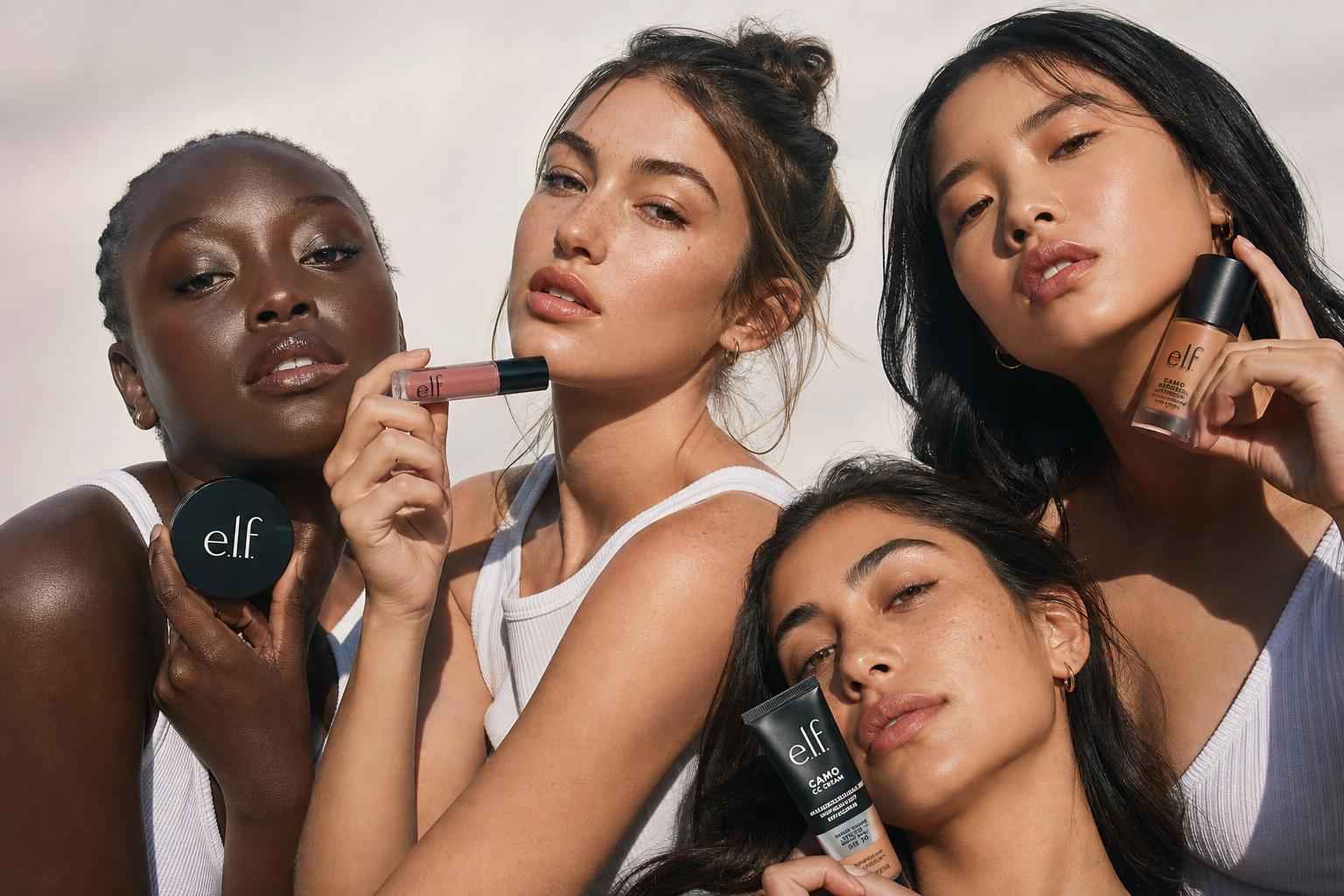
How e.l.f. Beauty Used TikTok to Challenge the Biggest Beauty Brands in America
Focused keyphrase: e.l.f. Beauty TikTok marketing
Related high-search keywords: beauty brand social media strategy, TikTok beauty campaign, Gen Z beauty marketing, viral cosmetics branding, disruptive digital marketing
What happens when a beauty brand stops acting like a legacy corporation and starts behaving like a cultural creator? You get e.l.f. Beauty—a brand that did not just show up on TikTok, but used it to redefine the rules of beauty marketing in America.
At a time when established cosmetics giants were still leaning heavily on polished TV spots, celebrity endorsements, and traditional campaign rollouts, e.l.f. moved where attention was actually going: short-form video, creator-first storytelling, community participation, and cultural speed. The result was not merely visibility. It was market disruption.
And that should make every ambitious brand ask a serious question: if a value-priced beauty company can challenge category leaders with social-first strategy, what is possible for your brand with the right creative partner?
The Beauty Industry Was Built for Big Players—Until TikTok Changed the Game
For decades, beauty marketing rewarded scale. The largest brands had the biggest media budgets, the strongest retail relationships, the broadest celebrity networks, and the loudest voice in the room. Success often depended on how much space you could buy—on shelves, in magazines, on television, and in department stores.
Then social media evolved. Then creator culture exploded. Then TikTok arrived and shifted the center of gravity from brand-controlled messaging to community-driven relevance.
Suddenly, the most important question was no longer “How much can you spend?” It became “Can you make people care enough to watch, remake, share, duet, comment, and buy?”
This was the perfect environment for e.l.f. Beauty. Known for affordable products and a strong value proposition, the brand was already positioned for broad consumer appeal. But product accessibility alone does not create cultural energy. What e.l.f. recognized was that TikTok rewards brands that understand entertainment, identity, and interaction—not just inventory.
Why TikTok mattered more than traditional media
TikTok is not simply another social platform. It is an algorithmic discovery engine where ideas can outrun budgets. A smart campaign can achieve extraordinary reach because users do more than watch—they participate. That distinction is everything.
According to TikTok’s business insights, the platform has become a major driver of product discovery and purchase behavior, especially among younger audiences and increasingly across broader demographics. You can explore TikTok’s business resources here: TikTok for Business.
In beauty, where application, transformation, routine, and review are naturally visual, TikTok became a perfect arena. It gave brands the chance to become part of everyday rituals rather than distant advertisers.
e.l.f. Beauty Saw TikTok as a Creative Playground, Not an Ad Channel
Many brands arrive on new platforms with old habits. They crop TV ads into vertical videos. They recycle campaign footage. They push messaging rather than invite engagement. And then they wonder why results feel flat.
e.l.f. took a different path. The company understood that on TikTok, audiences reward content that feels native, playful, musical, remixable, and emotionally in tune with the platform.
One of the most famous examples of this was e.l.f.’s #eyeslipsface campaign, which became one of TikTok’s standout branded moments. Rather than simply promoting products, the brand leaned into original music, creator participation, and culture-first storytelling. The campaign generated enormous engagement and became a blueprint for how brands could tap TikTok in a way that felt authentic to users rather than interruptive.
You can read more about the campaign and its impact in this case study coverage from TikTok’s business inspiration page and reporting from Adweek.
“The best TikTok campaigns do not feel like campaigns at all. They feel like culture in motion.”
— A truth proven by e.l.f.’s rise on the platform
They made the audience part of the story
This is where e.l.f. separated itself from bigger incumbents. It did not ask the audience only to consume. It asked them to create. By making campaigns participatory, the brand multiplied its reach through users, creators, and fans who became an active distribution network.
That is a powerful strategic lesson. In today’s digital economy, the strongest brands are often the ones that design for co-creation, not just communication.
Affordable Did Not Mean Small Thinking
There is an old mistake in branding: assuming lower-priced products should be marketed with lower ambition. e.l.f. rejected that completely. It positioned affordability not as a compromise, but as a modern advantage. In a market where prestige brands often rely on exclusivity, e.l.f. leaned into accessibility, inclusivity, and democratized beauty.
That mattered on TikTok because the platform naturally amplifies what feels attainable. Users are more likely to act on beauty recommendations when products are easy to find, reasonably priced, and instantly relevant. A viral luxury serum may spark curiosity. A viral e.l.f. product can spark a purchase today.
And in an uncertain economy, this positioning became even more intelligent. Consumers increasingly seek value without sacrificing quality. Market reporting has consistently shown e.l.f. gaining ground, supported by both product innovation and strong consumer resonance. Financial coverage from sources such as Forbes, CNBC, and company investor materials at e.l.f. Beauty Investor Relations provide evidence of how effectively the brand has translated cultural buzz into business performance.
The message was bigger than makeup
e.l.f. did not only sell eyeliner, primer, or skincare. It sold an idea: beauty can be fun, inclusive, expressive, and available to everyone. That broader emotional positioning makes content more shareable and more memorable.
When people share a beauty brand today, they are often signaling something about themselves. Their humor. Their values. Their aesthetic. Their budget intelligence. Their cultural awareness. e.l.f. understood this beautifully.
The Power of Originality: Music, Memes, Motion, and Momentum
One of the smartest aspects of e.l.f.’s TikTok strategy was its use of original creative assets rather than borrowed relevance alone. This matters because borrowed trends can deliver short-term spikes, but original concepts can build brand-owned memory.
The #eyeslipsface song, for example, was not just catchy. It gave the brand a repeatable identity. It embedded the name of the brand into a cultural artifact. That is elite branding. It is not just being seen. It is being remembered.
What the biggest brands often miss
Large brands sometimes over-polish everything. They optimize until personality disappears. They try to manage every frame, every word, every risk. But TikTok often rewards speed, wit, relatability, and creative looseness.
e.l.f. did not look careless. It looked alive.
That distinction is critical. The new competitive advantage in social media is not simply production quality. It is cultural fluency. Do you understand how people speak online? Do you know what kind of humor, pacing, sound, editing, and participation the platform invites? Can your brand feel current without looking desperate?
e.l.f. could.
Data, Community, and Consistency Turned Attention Into Growth
It is easy to romanticize virality. But one hit does not build a business. What made e.l.f. especially impressive was not just that it created standout moments, but that it continued to show up with consistency. Strong social strategy is not one post. It is an operating model.
TikTok gave e.l.f. a feedback loop
On platforms like TikTok, brands can learn in real time. Audiences signal what they love, ignore, question, remix, and purchase. Comments reveal sentiment. Shares indicate emotional resonance. Creator behavior surfaces opportunity. Trends expose timing. This creates an unusually powerful feedback loop between content, community, and commerce.
For agile brands, that is gold.
e.l.f. appears to have used this environment not just for awareness, but for sharper brand building and commercial responsiveness. The company’s broader growth story has been covered widely, including analysis of its digital strength and retail momentum by publications like Glossy and The Business of Fashion.
Consistency beat category complacency
Legacy beauty giants often have everything except agility. Layers of approval slow response times. Channel silos weaken creativity. Over-reliance on old media frameworks blunts innovation. e.l.f. proved that a nimbler brand can gain a disproportionate share of attention if it moves faster and thinks more natively.
That should sharpen the thinking of every marketing leader reading this. Are you still building campaigns for yesterday’s consumer journey? Are you producing polished assets no one wants to share? Are you waiting for audiences to come to you instead of meeting them where they live digitally?
And if so—why not get the solution?
What Other Brands Can Learn From e.l.f. Beauty’s TikTok Success
The lesson is not that every brand should copy e.l.f.’s exact style. The real lesson is deeper: winning brands align platform behavior, brand personality, audience psychology, and business goals.
1. Stop treating social media as an afterthought
If your social channels are still downstream from your main campaign thinking, you are already behind. Social is not where campaigns go to be repurposed. Increasingly, social is where campaigns are born.
2. Build for participation, not passive views
Can people respond to your brand creatively? Can they join your movement, challenge, sound, idea, or format? The more participatory your concept, the more scalable your visibility becomes.
3. Make brand memory easy
Distinctive music, repeatable phrases, recognizable visuals, creator partnerships, and emotionally clear positioning all help a brand stick. In a crowded feed, memory is a commercial asset.
4. Lead with relevance, not interruption
The strongest content earns time. It does not demand it. e.l.f.’s strategy shows that entertainment and identity can outperform hard-sell tactics when executed with clarity.
5. Let your values show up in the work
Inclusivity, accessibility, and self-expression were not abstract themes for e.l.f. They were visible in the brand experience. Consumers notice when a brand’s values are lived rather than merely stated.
Simple Snapshot: Why e.l.f.’s TikTok Approach Worked
| Strategic Element | What e.l.f. Did | Why It Mattered |
|---|---|---|
| Platform-native content | Created TikTok-first campaigns instead of repurposed ads | Improved authenticity and engagement |
| Original audio and creative | Used memorable sound and brand-linked concepts | Built recall and shareability |
| Participation | Invited users and creators into the campaign | Expanded reach through community behavior |
| Accessible products | Matched viral interest with affordable price points | Boosted conversion potential |
| Brand personality | Showed humor, confidence, and inclusivity | Created emotional connection with audiences |
The Bigger Business Truth: Attention Is Now a Competitive Weapon
This story is about more than beauty. It is about modern market leadership. e.l.f. Beauty demonstrated that in a fragmented media world, attention can be won by brands that are more adaptive, more creative, and more connected to culture than their larger rivals.
That is encouraging news for challenger brands. It is also a warning to established ones.
Because the next category leader may not be the company with the largest historical footprint. It may be the one that understands digital behavior most deeply and acts most decisively on that understanding.
So what does that mean for your brand?
It means your next breakthrough may not require a bigger media budget first. It may require a smarter strategy. A stronger creative system. Better storytelling. Sharper positioning. Platform-native execution. And a partner that knows how to turn brand ambition into market momentum.
If your brand is still speaking in a polished corporate voice while your audience is living in fast-moving digital culture, you are not just missing engagement—you may be missing growth.
Why Brands That Want This Kind of Growth Should Talk to Brandlab
There is a reason some brands become part of culture while others remain stuck in the content calendar. The difference is not luck. It is strategy, creative conviction, and execution that understands how modern audiences think and behave.
Brandlab can help brands translate these lessons into action. Whether you want sharper brand positioning, a stronger content strategy, more effective campaign thinking, or a social-first engine that actually drives awareness and conversion, this is the kind of moment where expert support changes outcomes.
What is possible when your brand gets this right?
Imagine campaigns people want to join.
Imagine content that earns conversation instead of begging for attention.
Imagine a brand identity clear enough to travel across channels without losing power.
Imagine your business becoming the name people reference when they talk about innovation in your category.
That is not theory. e.l.f. Beauty has already shown what is possible.
So the better question is this: why not get the solution?
If your team is ready to create the kind of marketing that people remember, share, and act on, get in contact with Brandlab. This is the moment to stop blending in and start building the kind of brand presence that competitors struggle to match.
Final Thought
e.l.f. Beauty TikTok marketing is not just a case study in viral success. It is a blueprint for how challenger brands can rethink power. By embracing platform-native creativity, encouraging participation, staying aligned with audience values, and turning social relevance into business strength, e.l.f. did something remarkable: it made some of the biggest beauty brands in America look slower, older, and less connected.
That is the opportunity in front of every ambitious brand today.
You can keep marketing the old way and hope attention returns.
Or you can build for the world as it is now.
Which future sounds more valuable to you?
Contact Brandlab and start creating the kind of growth story people will talk about next.