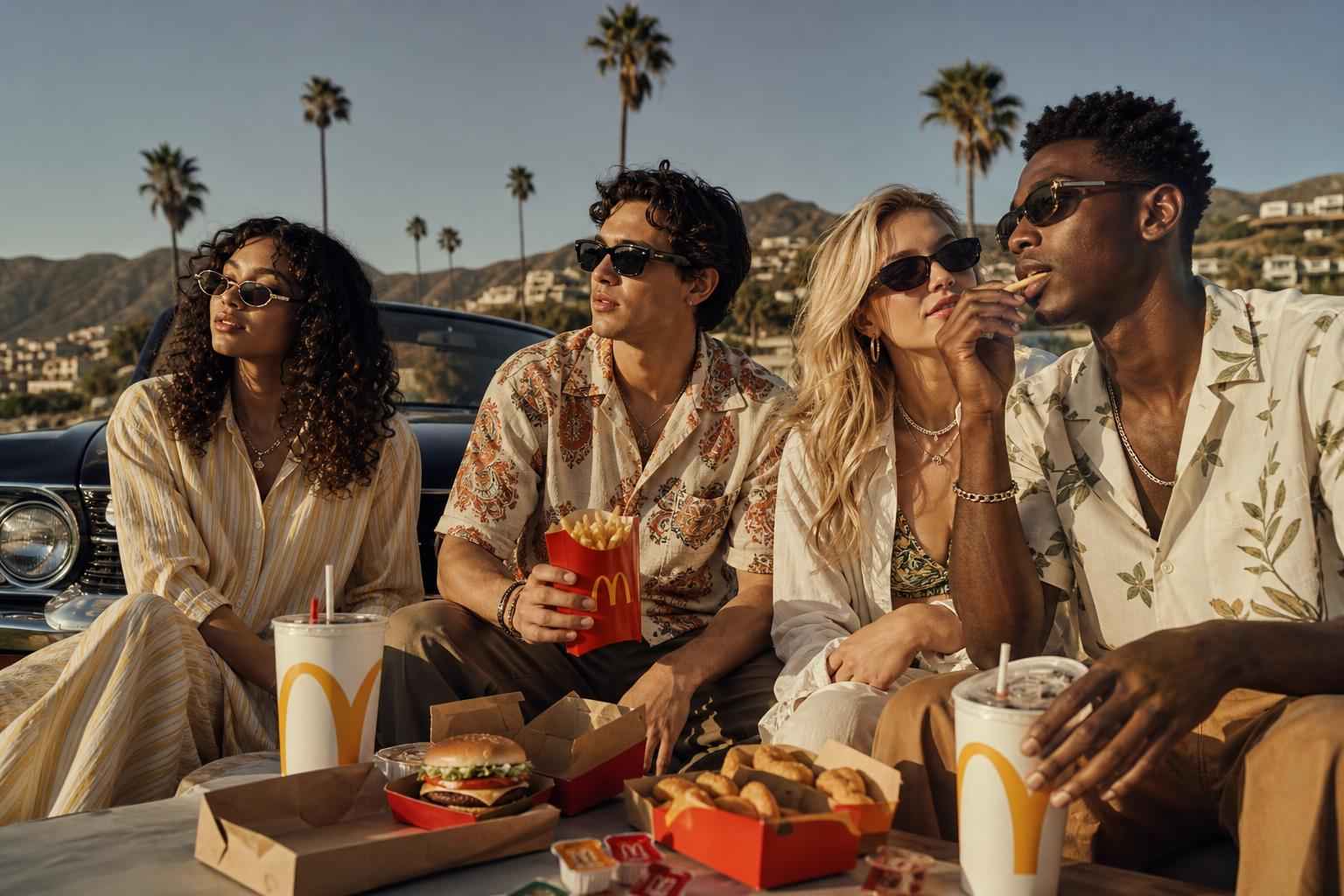
How McDonald’s Famous Orders Turned Celebrity Culture Into Customer Demand
Focused keyphrase: How McDonald’s Famous Orders Turned Celebrity Culture Into Customer Demand
Related SEO keywords: celebrity marketing strategy, McDonald’s Famous Orders, brand partnerships, consumer demand, influencer campaigns, fast food marketing, pop culture branding, customer engagement strategy
Some campaigns sell products. Others sell a feeling. The most powerful sell participation.
That is exactly why McDonald’s Famous Orders became more than a menu promotion. It became a smart lesson in how to translate celebrity culture into measurable customer demand. At its best, it was not simply about what a celebrity eats. It was about what fans do next.
What happens when cultural influence becomes operationally simple? What happens when fandom is packaged into a meal, given a name, amplified across social media, and sold at mass scale? You get a campaign that sits at the intersection of identity, habit, and desire.
For ambitious brands, the question is impossible to ignore: if a global fast-food giant can turn a routine purchase into a cultural event, what could your brand do with the right strategic storytelling?
Why the Famous Orders Strategy Worked So Well
McDonald’s knew something many brands still miss: customers do not always buy based on need alone. They buy to express who they are, who they admire, and what tribe they belong to.
The Famous Orders platform used that truth brilliantly. Instead of inventing a fictional product story, it borrowed real cultural energy from celebrities whose fan communities were already active, vocal, and emotionally invested. The result was not just a menu item. It was a shared social moment.
The brilliance was in the simplicity
There was no complicated product education required. A celebrity’s favorite order is immediately understandable. Fans can picture it, repeat it, post it, and purchase it. That level of simplicity is a dream in modern marketing, where attention is scarce and over-explaining often kills momentum.
The campaign made consumption feel personal
Ordering a meal became a symbolic act. Buying “the Travis Scott meal” or another celebrity-linked order was not only about taste—it felt like participating in the personality, world, and relevance of the star attached to it. In a culture driven by signals, that matters enormously.
It created social proof at scale
Celebrity endorsement is not new. But the campaign updated the model for a digital-first audience. It did not just say, “This celebrity likes our brand.” It invited people to publicly copy behavior. Copying is easier than deciding. And in marketing, ease often wins.
From Endorsement to Demand: The Cultural Mechanics Behind the Campaign
Why did this resonate so strongly? Because McDonald’s tapped into several powerful behavioural and cultural forces at the same time.
1. Parasocial relationships drive purchase behaviour
Consumers, especially younger audiences, often feel a deep familiarity with celebrities and creators. This is not abstract. It shapes buying decisions every day. Fans often want the products their favourite figures wear, eat, post, or recommend. Academic and marketing analysis around influencer trust and audience behaviour continues to show the strength of these dynamics.
For broader context on celebrity and influencer impact on buying behaviour, sources such as Think with Google and Sprout Social research regularly document how online influence shapes conversion, affinity, and brand recall.
2. Scarcity and timeliness sharpen action
Limited-time offers create urgency. Add a celebrity name to that urgency, and suddenly an ordinary purchase feels collectible. People do not want to miss the moment—especially if the moment is already trending.
This same principle has long been supported in behavioural science and marketing. Urgency increases responsiveness because it compresses decision-making. People ask fewer questions and act faster when they believe the opportunity is fleeting.
3. The campaign was inherently shareable
One of the biggest strengths of the format was how naturally it fit into social media culture. It was visual. It was meme-able. It was easy to photograph. It invited reaction. It even allowed irony, which is often essential for younger demographics. You could post the meal sincerely, jokingly, critically, or nostalgically—and all of it still fueled reach.
4. It blurred the line between menu and merchandise
The meal itself became a branded artifact. This is where many marketers should pause and take notes. The product did not merely satisfy hunger; it became a cultural object. And when a product becomes culturally symbolic, demand grows beyond utility.
Evidence the Strategy Was Not Just Hype
The impact of the Famous Orders concept was widely discussed by major business and marketing outlets because it delivered more than attention. It generated market momentum.
Coverage from CNBC, Business Insider, and Forbes examined how McDonald’s celebrity meal collaborations created long queues, major social conversation, and increased relevance among younger consumers.
For example, reporting around the Travis Scott collaboration highlighted how demand surged and some restaurant locations experienced ingredient shortages tied to the popularity of the order. See reporting from CNBC on the campaign’s outsized consumer response: McDonald’s Travis Scott meal caused shortages at some restaurants.
That is not normal promotional behaviour. That is what happens when a campaign crosses from advertising into culture.
What Brands Should Learn From McDonald’s Famous Orders
It is easy to admire this campaign and still miss the deeper lesson. The success was not only about celebrity access. It was about strategic translation. McDonald’s translated fame into a format customers could buy instantly.
Lesson 1: Make cultural relevance actionable
Plenty of brands want to be relevant. Far fewer make relevance easy to purchase. McDonald’s did not stop at association. It built a frictionless path from awareness to action. See celebrity. Recognise name. Order meal. Share experience.
That level of clarity matters. If your audience has to work too hard to understand the offer, the opportunity weakens. The best campaigns remove mental load.
Lesson 2: Productise identity
The strongest demand often comes when people feel they are buying identity, not just function. Customers ask themselves, even subconsciously: what does this say about me? What conversation does this put me in? What world does this place me inside?
McDonald’s answered those questions brilliantly. It made the customer part of a larger cultural narrative. That is a rare and lucrative achievement.
Lesson 3: Use fandom as a growth engine
Modern fandom is organised, expressive, and fast-moving. When brands align with it intelligently, they benefit from existing emotional infrastructure. But this only works when the collaboration feels native rather than forced.
That is why brand-fit matters so much. A celebrity partnership should feel believable, talkable, and strategically coherent.
Lesson 4: Let the audience do the heavy lifting
Some of the most effective campaigns are designed for audience participation. User-generated content, reactions, remixes, trends, and social discussion become part of the media machine. In that sense, the audience is not just the target. They are the distribution channel.
A Strategic Breakdown in Table Form
| Campaign Element | Why It Worked | Brand Lesson |
|---|---|---|
| Celebrity-linked menu items | Made fame feel tangible and purchasable | Turn abstract brand awareness into concrete action |
| Limited-time availability | Created urgency and social momentum | Use scarcity carefully to accelerate decisions |
| Simple product format | Easy to understand, order, and share | Complexity reduces conversion |
| Social-first storytelling | Encouraged online participation and memes | Build campaigns people can carry for you |
| Strong cultural alignment | Felt relevant to younger audiences and pop culture | Choose partnerships with credible audience overlap |
The Bigger Marketing Truth: Consumers Want Meaning, Not Just Messaging
There is a reason so many conventional adverts are forgotten within hours. They communicate features without creating emotional velocity. McDonald’s Famous Orders did the opposite. It tied a functional product to status, story, and social energy.
And this opens a much bigger strategic conversation for growth-focused brands. Are you just publishing content, or are you building moments? Are you merely promoting offers, or are you constructing demand through relevance? Are you asking your audience to notice you, or giving them a reason to talk about you?
Demand today is often culturally mediated
In many sectors, especially consumer-facing ones, purchase behaviour is shaped by what people see peers, creators, and public figures doing. This does not mean every brand needs a celebrity. It means every brand needs a cultural mechanism. Something that turns attention into identification and identification into action.
That mechanism must be native to your audience
For some brands, that might be influencer partnerships. For others, brand collaborations, community-led campaigns, founder-led storytelling, smart PR, or limited-edition products. The format changes. The principle does not.
If customers can see themselves in the story, demand rises.
Could This Work Outside Fast Food? Absolutely
One of the most inspiring aspects of this campaign is that its logic can travel across industries.
Retail brands can create creator-curated edits
Instead of broad collections, think about highly shareable, personality-led product bundles. Curated by someone with cultural or niche authority. The audience is not just buying items. They are buying a point of view.
Hospitality brands can sell signature experiences
A hotel, bar, or restaurant can package “the weekend edit,” “the founder’s picks,” or “the artist stay.” Again, it is not merely a service—it is a story customers can step into.
B2B brands can do this through authority and trust
Even in professional markets, decision-makers respond to credibility and association. Industry leaders, respected founders, strategic experts, and category voices can help package complex services into desirable and accessible propositions.
So ask yourself: what is the equivalent of a Famous Order in your market? What could you package, name, simplify, and socialise so effectively that customers feel compelled to say yes?
Where Brandlab Comes In
Campaigns like this are exciting because they remind us that growth is not only about bigger budgets. It is about sharper strategy. It is about understanding human behaviour, cultural momentum, and brand design well enough to create demand that feels almost inevitable.
That is where Brandlab can make the difference.
Brandlab can help you find your cultural edge
Not every brand should copy McDonald’s. But every brand can learn how to identify its own version of relevance. Brandlab can help uncover the narrative, audience tension, offer design, and partnership opportunities that move your brand from visible to wanted.
Brandlab can turn ideas into conversion-ready campaigns
The real advantage is not having a flashy concept. It is having a concept that is strategically aligned, creatively bold, and commercially effective. That means the message, audience, content, and activation all work together.
Brandlab can help you build demand, not just attention
Attention is useful. Demand is transformative. If your brand is attracting views but not action, engagement but not movement, curiosity but not contact, it may be time for a smarter growth framework.
If you want a brand strategy that creates demand, sharpens your market position, and turns cultural insight into commercial traction, it is time to speak with Brandlab.
Why not get the solution? If your next customer-winning idea is waiting inside the right strategy, contact Brandlab and build something people do not just notice—but want.
Final Thought: A Meal Was Never Just a Meal
How McDonald’s Famous Orders Turned Celebrity Culture Into Customer Demand is ultimately a story about modern branding at its most effective. The campaign worked because it understood that people are not passive consumers. They are cultural participants. They buy symbols. They buy shortcuts to identity. They buy stories they can step inside.
McDonald’s recognised that a meal could act like media, merchandise, fandom, and conversation all at once. That is fresh thinking. That is strategic clarity. And that is exactly the sort of insight brands need if they want to grow in noisy markets.
So here is the real question: if your audience is already looking for something to believe in, talk about, and buy into—why not give them the solution?
And if you are serious about creating the kind of demand that makes people say yes before you even need to ask twice, get in contact with Brandlab.