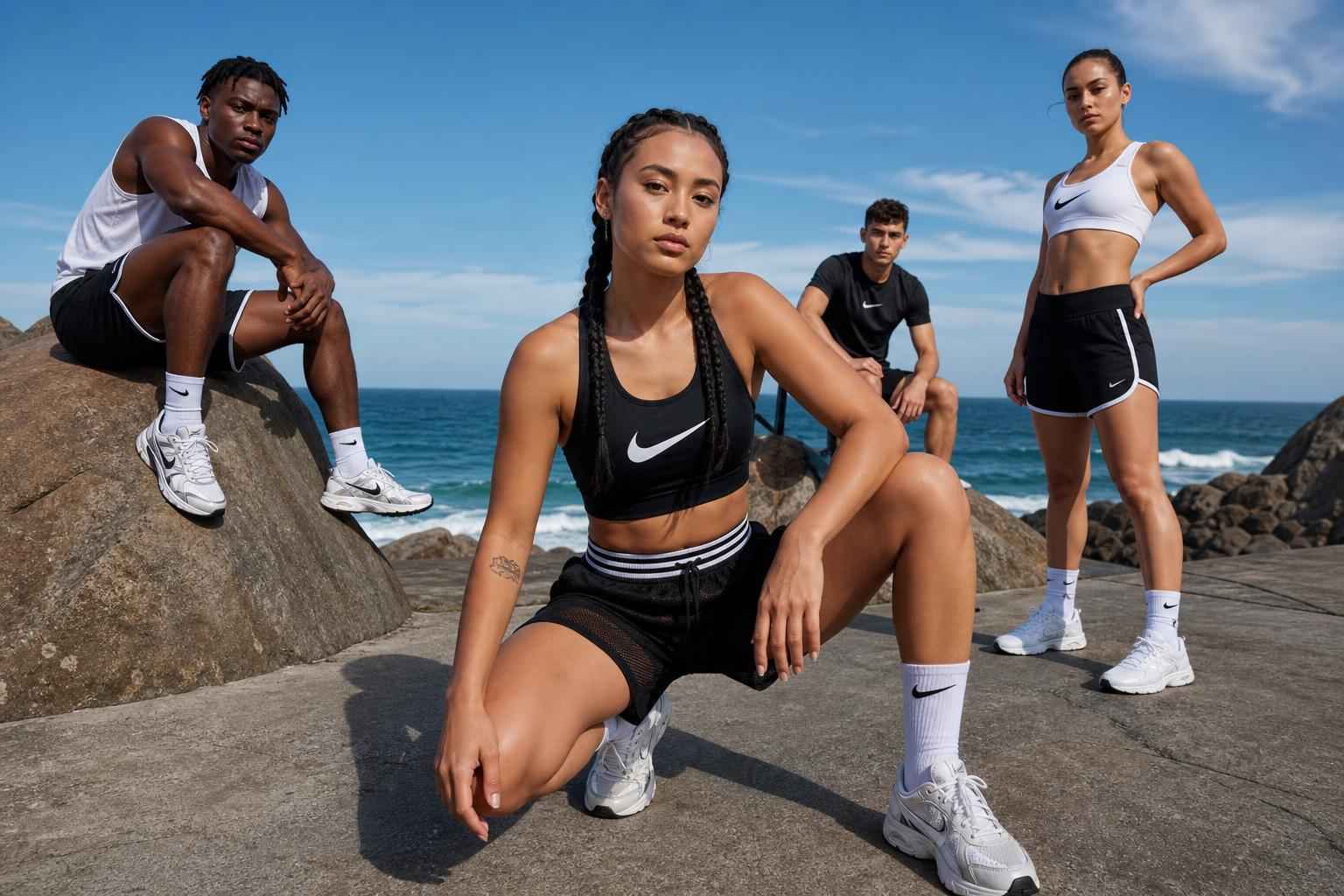
How Nike Turns Cultural Moments Into Marketing That Drives Global Sales
Keyphrase: How Nike turns cultural moments into marketing that drives global sales
Some brands advertise. Some brands sponsor. A rare few shape the conversation of an era. Nike has spent decades proving that the most effective marketing does not simply sell a product—it captures a feeling, enters culture at exactly the right moment, and turns that energy into commercial momentum across continents.
That is why understanding how Nike turns cultural moments into marketing that drives global sales matters so much to ambitious brands. Nike is not just reacting to trends. It is building a system where sport, identity, controversy, aspiration, and storytelling become demand engines. The result is a marketing model that helps the brand remain globally relevant, emotionally resonant, and commercially powerful.
For growth-minded businesses, this raises an exciting question: what becomes possible when your brand stops chasing attention and starts creating cultural relevance?
Why Nike’s Marketing Feels Bigger Than Advertising
The brand sells belief before it sells products
The reason Nike’s campaigns stay with people is simple: they are rarely about shoes first. They are about ambition, identity, resilience, rebellion, excellence, community, and self-expression. That emotional layer transforms a product into a badge of meaning.
Customers do not just buy trainers, shirts, or performance gear. They buy what those items represent in the wider culture. This is one of the most important lessons in modern brand strategy: people remember how a brand makes them feel long after they forget a product feature list.
Nike’s famous “Just Do It” platform is a masterclass in this. It is broad enough to travel globally, but emotionally sharp enough to apply to elite athletes, everyday runners, young creators, and entire communities. Few lines in advertising history have achieved that level of cultural elasticity.
Cultural timing is treated as a strategic asset
Nike understands that timing can make the difference between a campaign that lands and one that disappears. The brand is deeply tuned into the moments people care about—major tournaments, athlete milestones, social movements, streetwear shifts, youth culture, fitness trends, gender conversations, and even regional identity.
By entering those moments with confidence and clarity, Nike gains relevance that feels organic rather than forced. This is not random spontaneity. It is highly disciplined brand orchestration.
According to Nike’s own brand ecosystem, the company consistently positions itself at the intersection of sport, innovation, and culture. That intersection is exactly where modern attention is won.
The Core Engine: How Nike Converts Cultural Relevance Into Revenue
Step 1: Identify the emotional tension in the moment
Nike rarely starts with “What do we want to sell this quarter?” It often starts with “What are people feeling right now?” That distinction is everything.
Every major cultural moment contains tension: hope versus fear, underdog versus establishment, individuality versus conformity, progress versus resistance. Nike excels at identifying that emotional charge and turning it into a creative platform.
Think about the tension in women’s sport receiving greater recognition, or younger consumers demanding authenticity, or athletes using their platform to speak on social issues. Nike identifies where passion already exists—and then amplifies it.
Step 2: Attach the brand to a human story
People do not connect deeply to corporate messaging. They connect to people. Nike uses athletes, creators, teams, and communities as vessels for a much larger emotional idea. This turns campaigns into stories worth sharing.
Whether it is a world-class footballer, a marathon runner, a basketball icon, or a local collective, the human layer gives the campaign credibility. It also helps Nike avoid sounding abstract or self-congratulatory.
The best Nike stories are not framed as “Look at us.” They are framed as “Look at what is possible.” That shift is one of the reasons they travel so effectively across borders.
Step 3: Build visual and verbal simplicity
The strongest campaigns usually feel inevitable in hindsight. Nike’s best work is emotionally layered but creatively clear. It understands the power of strong iconography, spare language, memorable film craft, and repeatable core ideas.
That simplicity matters at global scale. If a campaign is too complicated, it will struggle to move between audiences, languages, and platforms. Nike builds ideas that can live in a stadium, on TikTok, in an out-of-home placement, inside a retail environment, and on a product drop.
Step 4: Create scarcity, conversation, and community participation
Cultural heat alone is not enough. Nike often supports storytelling with limited releases, athlete collaborations, event activations, digital content, and social engagement mechanics that turn viewers into participants.
This creates a flywheel:
| Nike Marketing Lever | Cultural Effect | Commercial Outcome |
|---|---|---|
| Athlete storytelling | Emotional connection | Brand loyalty and recall |
| Timely cultural alignment | Conversation and relevance | Higher engagement and earned media |
| Limited edition drops | Scarcity and hype | Fast sell-through and premium pricing |
| Community activation | Belonging and participation | Repeat purchase and advocacy |
Examples of Nike Owning the Moment
When athlete narratives become global brand narratives
One of Nike’s most powerful competitive advantages is its ability to transform the journey of a single athlete into a shared cultural experience. This is not accidental celebrity endorsement. It is narrative architecture.
Michael Jordan did not just help sell basketball shoes—he helped create one of the most powerful product and identity ecosystems in brand history. The Air Jordan line became a bridge connecting performance, fashion, music, collecting, and status.
For evidence of the enduring cultural impact of Jordan products and strategy, see reporting and analysis around the resale and sneaker economy from sources such as StockX market insights and broader business reporting from Forbes.
Campaigns that step into social conversation
Nike has also shown a willingness to engage with moments bigger than sport. This comes with risk, but it also creates extraordinary relevance. The brand’s campaign featuring Colin Kaepernick became a defining case study in values-led marketing and public debate.
The campaign generated intense response, but it also demonstrated something crucial: brands that understand their audience and stand for something meaningful can deepen loyalty, even amid controversy. Research and reporting from outlets including The New York Times and The Wall Street Journal documented the scale of discussion and commercial implications.
— Nike campaign line associated with Colin Kaepernick, one of the most discussed modern examples of brand values and cultural marketing.
Women’s sport and underrepresented audiences as growth territory
Nike has increasingly recognised that some of the biggest opportunities in brand growth come from audiences historically underserved by mainstream marketing. Women’s sport, inclusive sizing, youth communities, and regionally specific identities are not niche afterthoughts—they are major arenas of cultural and commercial growth.
Coverage from McKinsey and Deloitte has repeatedly highlighted the rising commercial power of women’s sport and the expanding economic significance of purpose-driven, community-led branding. Nike has been well positioned to capitalise on this shift because it treats representation as both a cultural and strategic imperative.
What Nike Understands About Global Sales That Many Brands Miss
Global growth starts with local resonance
Many businesses think scaling globally means standardising everything. Nike knows the opposite can be true. A brand grows globally when it learns how to be meaningful locally.
This means understanding how football culture differs between London, Lagos, São Paulo, Paris, and Seoul. It means recognising the role of running clubs, youth style, music scenes, athlete heroes, and social issues in different markets. Nike’s scale works because it combines a powerful global brand system with localised cultural fluency.
This is a critical lesson for any ambitious business. If your marketing is technically visible everywhere but emotionally resonant nowhere, growth becomes expensive and fragile.
Performance marketing works harder when the brand is culturally hot
One of the most overlooked truths in digital marketing is this: brand and performance are not enemies. They multiply each other. Nike’s brand heat improves the efficiency of its product launches, ecommerce conversion, retail demand, and social engagement.
When a marketing ecosystem is culturally alive, every touchpoint works harder. Search interest rises. Organic conversation grows. Paid media earns better attention. Product drops sell faster. Retail partners benefit from stronger pull-through.
Research from the Institute of Practitioners in Advertising and Kantar has long reinforced the idea that long-term brand building strengthens short-term activation. Nike is one of the clearest real-world expressions of that principle.
A Simple Visual: The Nike Cultural Marketing Flywheel
Cultural Insight
      ↓
Human Story
      ↓
Bold Creative Expression
      ↓
Social Conversation
      ↓
Community Participation
      ↓
Demand Spike
      ↓
Retail / Ecommerce Sales
      ↓
Brand Momentum
      ↺
What makes this flywheel so powerful is that it is self-reinforcing. Success in one moment strengthens Nike’s credibility for the next one.
What Brands Can Learn From Nike Right Now
1. Stop talking only about your products
If your marketing sounds like a product sheet with better design, it will struggle to create memory or emotion. The strongest brands connect product benefits to human ambition. Ask yourself: what does our customer want to become?
2. Find the cultural spaces where your audience already feels something
You do not need to manufacture relevance from nothing. Look for communities, passions, frustrations, identities, and aspirations that already exist. The opportunity is not to interrupt them. It is to contribute meaningfully.
3. Take a position that people can recognise
Safe, generic messaging might avoid criticism, but it rarely creates devotion. Nike shows that clear positioning—if grounded in truth and audience understanding—can build stronger loyalty than watered-down communication ever will.
4. Build campaigns that can travel across channels
Your core idea should be strong enough to live in video, social, PR, events, influencer partnerships, retail, and email. Too many brands create fragmented executions instead of one coherent narrative system.
5. Treat culture as strategy, not decoration
Adding slang, trend references, or influencer names at the end of the process is not cultural marketing. Real cultural strategy shapes the idea from the beginning. That is where enduring relevance comes from.
Why This Matters for Businesses Beyond Sport and Fashion
The Nike lesson applies far beyond trainers
You may not operate in footwear, apparel, or elite sport. That does not reduce the relevance of Nike’s model. In fact, it makes it more useful. Whether you are in property, hospitality, health, professional services, education, finance, beauty, technology, or retail, your audience still lives inside culture. They still respond to identity, emotion, belonging, trust, and aspiration.
That means your brand also has opportunities to connect with a moment, tell stories that matter, and build demand through relevance rather than noise.
Imagine what could happen if your business became known not just for what it sells, but for what it unlocks. What if your campaigns made people feel understood? What if your brand became part of a bigger conversation? What if your marketing generated commercial impact because it felt genuinely alive?
Why not get the solution?
Where Brandlab Can Help Turn Insight Into Action
From observation to execution
Many businesses can see that Nike does something special. Far fewer know how to translate that insight into a practical strategy for their own market, budget, team, and goals. That is where expert guidance matters.
Brandlab can help businesses identify the cultural opportunities hiding inside their category, shape a sharper brand position, build campaigns with emotional depth, and connect storytelling to measurable growth outcomes. The goal is not to imitate Nike. The goal is to apply the underlying principles in a way that is authentic to your business and commercially effective.
What working with Brandlab could unlock
- Clearer positioning that differentiates your brand in crowded markets
- Campaign strategy rooted in audience insight and cultural relevance
- Creative direction that is memorable, distinctive, and conversion-aware
- Integrated marketing systems connecting brand, content, social, digital, and sales
- Growth thinking that turns attention into action
That is the difference between campaigns people scroll past and campaigns people carry with them.
The Final Takeaway
Nike wins because it understands people, not just promotions
At its best, Nike’s marketing is not a sequence of ads. It is a highly tuned system for spotting emotional energy in the culture, distilling it into compelling stories, and converting that relevance into brand heat, customer loyalty, and global sales.
That is the real answer to how Nike turns cultural moments into marketing that drives global sales. It listens closely. It moves boldly. It uses human stories to carry brand meaning. It respects the power of timing. It makes campaigns participatory. And it ensures every cultural spark has a path to commercial return.
Now ask yourself: is your current marketing simply present in the market, or is it shaping how people feel, talk, and act?
If the answer is not where you want it to be, this is the moment to do something about it. Contact Brandlab and explore what your brand could become with stronger positioning, sharper storytelling, and marketing designed to create both cultural relevance and measurable growth.
Because in a world full of content, the brands that win are the ones that matter.