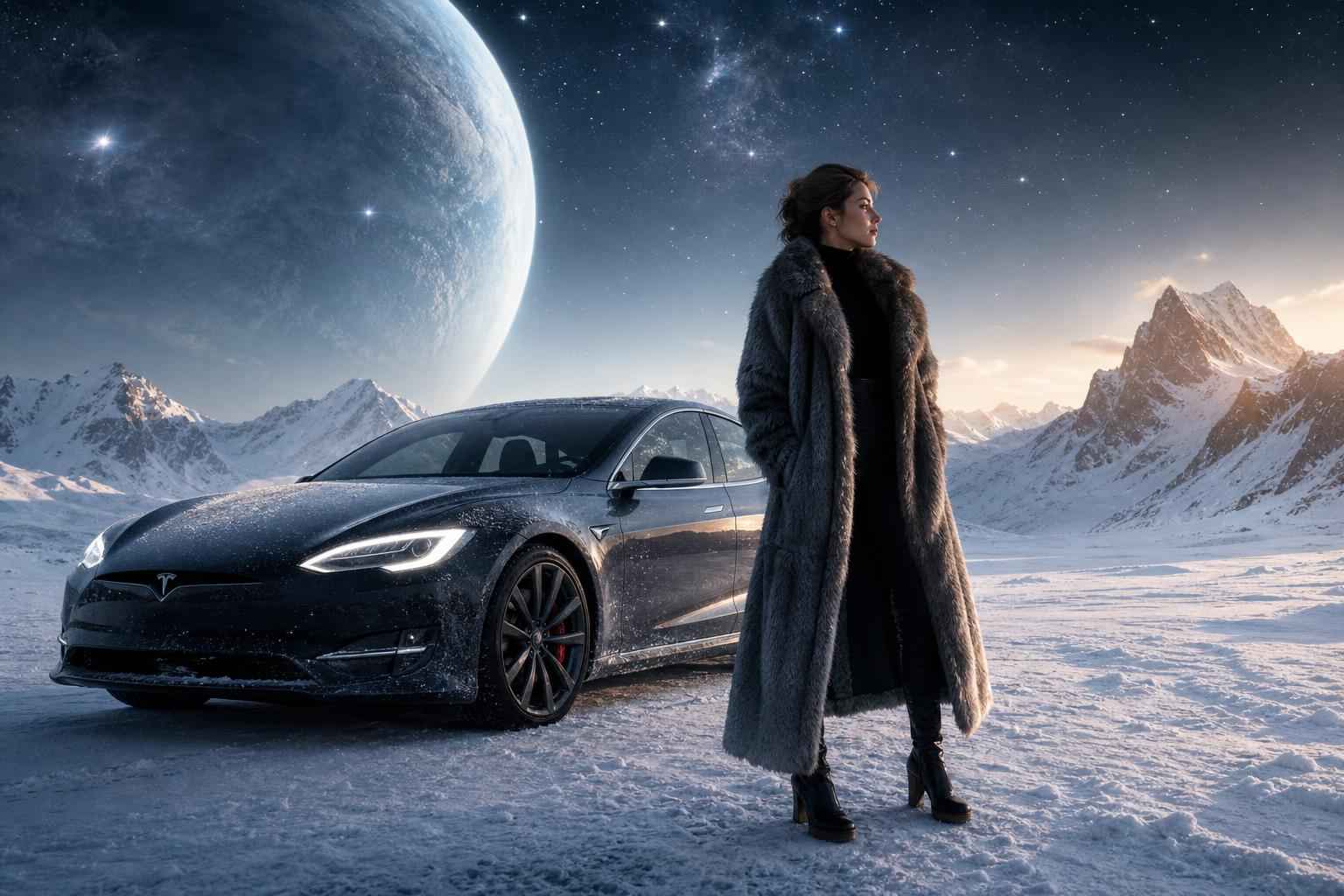
How Tesla Built Massive Customer Demand Without Traditional Advertising
Tesla marketing strategy, customer demand without advertising, brand-led growth, and word-of-mouth marketing are now some of the most searched ideas in modern business strategy. And for good reason. Tesla has done what many brands spend billions trying to achieve: it created extraordinary global demand, built a tribe-like customer base, and became one of the most talked-about companies in the world—largely without relying on traditional advertising.
That is not just a story about electric vehicles. It is a story about attention, belief, brand positioning, and the power of making people feel part of something bigger. If you are a founder, marketing leader, or business owner asking how to create unforgettable demand in a crowded market, Tesla offers one of the boldest case studies of the century.
So the real question is not whether your business can copy Tesla exactly. It cannot. The real question is this: what can your brand learn from Tesla’s demand engine? More importantly, why not get the solution that helps your business turn attention into action and curiosity into revenue?
What Makes Tesla’s Growth So Unusual?
Most major car brands have historically depended on massive advertising budgets. According to Statista’s advertising industry reporting, leading consumer brands regularly spend billions to stay visible. The automotive sector has long been one of the most aggressive ad categories across TV, print, sponsorships, and digital media. Tesla disrupted that pattern.
Rather than flooding the market with conventional campaigns, Tesla built demand through earned media, product storytelling, founder visibility, community enthusiasm, and a direct-to-consumer experience that made people feel they were entering the future ahead of everyone else.
It created fascination before it created scale
Many companies try to scale first and differentiate later. Tesla did the opposite. It began by creating fascination. The Roadster was not designed to be a mass-market vehicle. It was designed to spark attention. Then the Model S proved electric cars could be high-performance and desirable. Then Tesla kept escalating the public story: innovation, autonomy, charging networks, software updates, and mission-driven leadership.
This created an unusual effect. People did not just know about Tesla. They followed Tesla. They debated it, defended it, criticized it, admired it, and shared it. That level of public conversation is priceless.
Tesla turned product launches into cultural events
Every launch felt like a moment. Unveilings were not presented like ordinary sales events. They felt more like technology reveals mixed with entertainment, futurism, and ambition. This transformed every announcement into something highly shareable.
Apple has long mastered this style of launch psychology, and Tesla adapted it brilliantly. Products became stories, stories became headlines, and headlines became demand.
“Tesla is a masterclass in making customers feel they are buying into the future, not just purchasing a vehicle.”
— A common view echoed across branding and innovation commentary
The Core Reason Tesla Did Not Need Traditional Advertising
The answer is simple on the surface and profound in practice: people became the media channel.
Tesla owners, investors, fans, journalists, YouTubers, analysts, critics, and social media users all contributed to the brand’s visibility. That means Tesla did not need to buy the same amount of attention in the conventional way because it had already engineered something far more valuable—organic discussion at scale.
Demand was driven by identity, not just utility
Traditional advertising often pushes product features. Tesla made ownership mean something. Driving a Tesla signaled innovation, environmental awareness, modern taste, and participation in a high-tech movement. When people buy identity, they market the brand for you.
This is one of the most important lessons for any business trying to stand out today. If your offer is only practical, you are easy to compare. If your offer is symbolic, emotional, and culturally resonant, you become much harder to ignore.
The mission mattered as much as the machine
Tesla’s mission—accelerating the world’s transition to sustainable energy—gave its products moral energy. Customers did not feel like they were making a regular transaction. They felt like they were participating in progress. Mission-driven narratives can be extraordinarily powerful because they make customers feel their purchase has wider meaning.
You can review Tesla’s mission and investor communications directly through its official corporate materials here: Tesla official website and Tesla Investor Relations.
The Demand Engine: 7 Ways Tesla Created Massive Customer Interest
1. Radical product differentiation
Tesla did not aim to be slightly better. It aimed to feel dramatically different. Design, acceleration, software interface, over-the-air updates, charging access, and self-driving ambition all helped create the perception that Tesla was not simply another car company.
Research consistently shows that distinctiveness fuels growth. The Ehrenberg-Bass Institute’s work on brand growth and mental availability has influenced how marketers think about salience and customer memory structures. You can explore more via the Ehrenberg-Bass Institute.
2. Founder-led attention
Elon Musk’s visibility played a huge role in Tesla’s demand generation. Love him or question him, he commanded attention on a vast scale. His public statements often generated news cycles without Tesla buying media. In effect, the founder became a living amplifier for the brand.
This is not a tactic every brand can or should copy literally. But there is a broader lesson: audiences respond to human energy. When a brand has a visible point of view, people engage more deeply.
3. Word-of-mouth that felt earned
People talk when something surprises them. Tesla cars surprised people: silent speed, minimalist interiors, large touchscreens, software updates, and a different ownership experience. Owners became demonstrators. They showed the car to friends, posted on social media, and created advocacy naturally.
Nielsen has repeatedly found that consumers trust recommendations from people they know more than many forms of paid promotion. That broader trust dynamic helps explain why word-of-mouth can outperform expensive campaigns. See Nielsen for ongoing consumer trust and media research.
4. Scarcity and anticipation
Scarcity creates heat. Tesla frequently benefited from limited availability, strong reservation interest, and long waiting periods that actually intensified desire. When products appear constrained, people infer they are valuable. This is classic demand psychology.
5. A direct relationship with customers
By emphasizing a direct-to-consumer model, Tesla gained more control over the brand experience. Traditional dealerships can dilute positioning because they often sell competing products side by side. Tesla’s approach allowed it to build a more curated, immersive customer journey.
This model has also been extensively discussed in industry coverage such as Reuters and other business reporting that tracks automotive retail change.
6. Media magnetism through controversy and innovation
Some brands avoid attention unless it is controlled. Tesla often lived in the opposite space: intense visibility, bold claims, polarised opinions, and relentless newsworthiness. While this approach carries risk, it also drove one undeniable advantage—people kept watching.
7. A category bigger than itself
Electric vehicles were not just a product category. They became part of a larger social shift involving climate awareness, energy transformation, government policy, battery innovation, and the future of transportation. Tesla was positioned at the centre of that conversation.
A Simple Chart: Tesla’s Demand Pattern vs Traditional Brand Growth
| Growth Lever | Traditional Brand Approach | Tesla’s Approach |
|---|---|---|
| Awareness | Paid media campaigns | Earned media, founder attention, product buzz |
| Trust | Brand messaging and promotions | Owner advocacy, reviews, public demonstration |
| Desire | Feature-led comparisons | Identity, innovation, future-focused aspiration |
| Conversion | Dealer model and promotions | Direct-to-consumer experience and reservation momentum |
| Retention | Service reminders and loyalty offers | Software updates, ecosystem value, ongoing excitement |
What Businesses Can Learn From Tesla Right Now
You may not be selling electric vehicles. You may not have a celebrity founder. You may not dominate headlines. But Tesla’s principles can still transform how you think about growth.
Build a story people want to retell
If your brand story sounds like everyone else in the market, customers will struggle to remember it. Great demand begins with memorable narrative architecture. What do you stand for? What are you changing? Why now? Why should anyone care?
Make your product experience market your business
Too many brands separate marketing from the product itself. Tesla blurred the line. The product was the message. The experience was inherently talkable. Ask yourself: does your product create moments people want to share?
Create demand before asking for the sale
One of the reasons many campaigns underperform is that brands ask for conversion before earning fascination. Tesla built anticipation, expectation, and emotional investment long before many people were ready to buy.
Stop blending in
The market rarely rewards the safest brand in the room. It rewards the clearest, most memorable, and most distinct. Distinctiveness is not decoration. It is a demand multiplier.
“The strongest brands do not chase attention. They create meaning so powerful that attention follows.”
— A principle central to modern brand strategy
The Hidden Risk in Tesla’s Strategy
It would be lazy to treat Tesla’s path as effortless genius without noting the risk. Reliance on founder attention can create volatility. Intense brand visibility can amplify scrutiny. Community advocacy can turn into backlash if expectations are missed. A high-profile narrative can inflate pressure around execution.
That is why the deeper lesson is not “never advertise.” The deeper lesson is that exceptional demand happens when brand, product, mission, and conversation align. Advertising works best when it amplifies something already compelling. It struggles when it tries to rescue something forgettable.
Why This Matters More Than Ever in Today’s Market
Customers are overwhelmed. Feeds are crowded. Trust is fractured. Attention is expensive. In that environment, businesses cannot rely only on louder promotion. They need stronger positioning, more magnetic storytelling, and experiences worth talking about.
This is exactly why the phrase How Tesla Built Massive Customer Demand Without Traditional Advertising matters far beyond the automotive sector. It is a masterclass in modern relevance. It shows that demand is not merely bought. It is built.
People do not just buy products anymore
They buy values. They buy confidence. They buy identity. They buy progress. They buy stories that make sense of the future. Tesla understood that earlier than most.
Every brand now competes for belief
Features can be copied. Pricing can be undercut. Campaigns can be mimicked. But belief—real emotional conviction in what a brand stands for—is extraordinarily hard to replicate.
Could Your Brand Create This Kind of Demand?
Yes—but not by copying surface tactics. The answer lies in discovering your own version of what made Tesla powerful:
- A sharper market position
- A stronger narrative
- A more memorable customer experience
- A clear reason people should talk about you
- A brand system designed for trust, desire, and action
That is where strategy changes everything. It is also where many brands stall. They have a good product, but weak differentiation. They have expertise, but no magnetic story. They have ambition, but no demand engine.
Why Not Get the Solution?
If Tesla teaches us anything, it is this: brands do not win by being invisible and vaguely competent. They win by being clear, distinctive, desirable, and impossible to ignore.
So what is possible for your business if you build demand more intelligently? What happens when your message cuts through? When customers instantly understand your value? When your brand finally reflects the quality of what you truly offer?
Why not get the solution?
If your business is ready to create stronger demand, stronger positioning, and stronger market presence, this is the moment to act. Brandlab can help turn your expertise into a brand that attracts attention and converts it into growth. From brand strategy and messaging to positioning and creative direction, the opportunity is not just to look better—it is to become far more wanted.
Suggest getting in contact with Brandlab
If you want your brand to inspire trust the way leading names do, create demand without wasting budget, and stand apart in a crowded market, get in contact with Brandlab. The right brand strategy does not just improve perception. It changes commercial outcomes.
So ask the question seriously: if your business could create more demand, more advocacy, and more momentum—why would you wait?
Contact Brandlab and start building the kind of market demand people talk about, remember, and say yes to.
Further Reading and Evidence
- Tesla Official Website
- Tesla Investor Relations
- Reuters Business Coverage
- Nielsen Consumer Research
- Ehrenberg-Bass Institute for Marketing Science
- Statista Advertising Data
In the end, How Tesla Built Massive Customer Demand Without Traditional Advertising is not just a business headline. It is a challenge to every ambitious brand: can you become so relevant, so distinct, and so meaningfully positioned that customers do the talking for you?
With the right strategy, the answer can be yes.