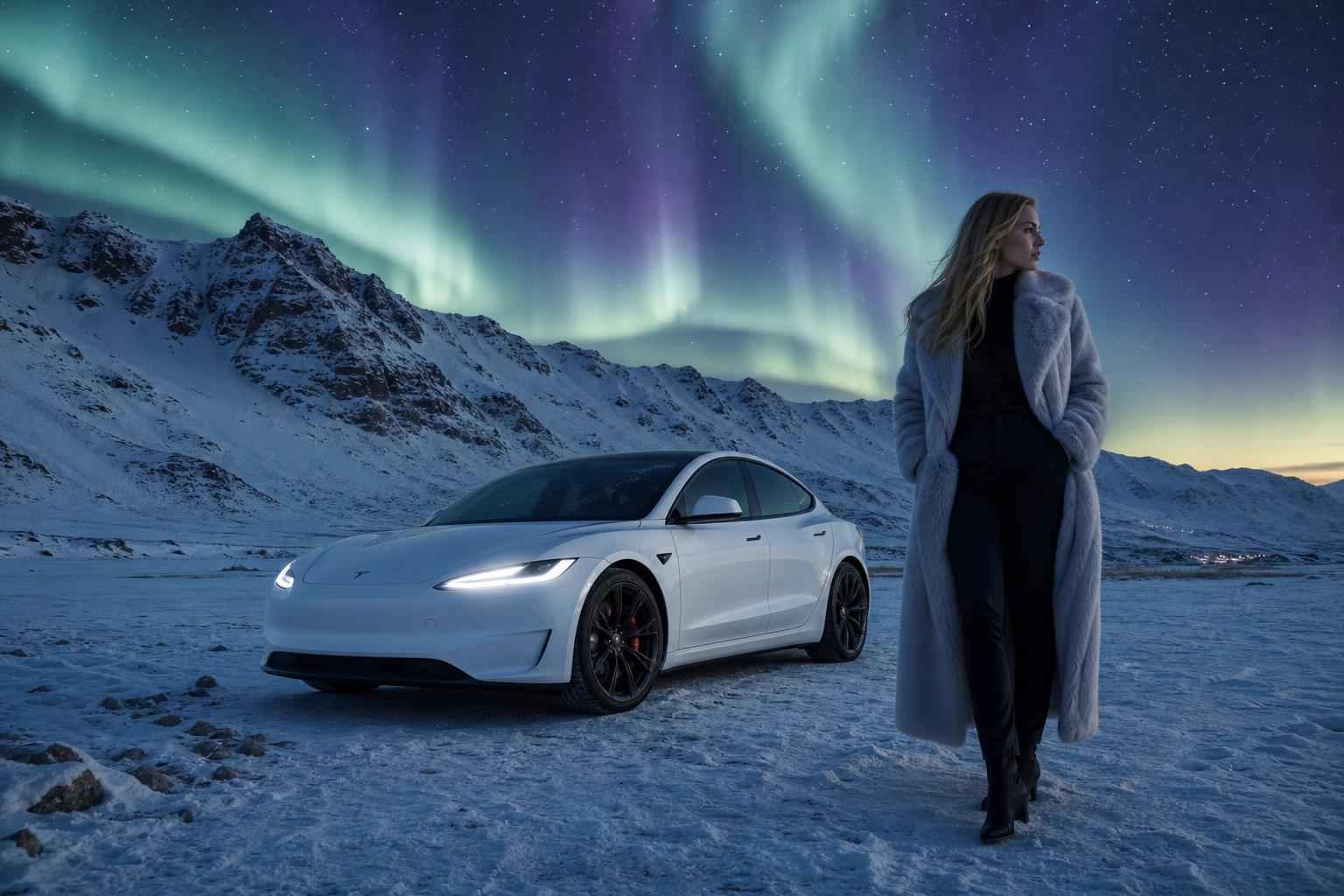
How Tesla Built Massive Customer Demand Without Traditional Advertising
Focused keyphrase: How Tesla Built Massive Customer Demand Without Traditional Advertising
SEO keywords: Tesla marketing strategy, customer demand generation, brand loyalty, word-of-mouth marketing, direct-to-consumer strategy, electric vehicle brand growth, premium brand positioning, viral marketing, brand experience, Brandlab
Most companies spend years and millions trying to win attention. Tesla did something more unusual: it built massive customer demand while spending little to nothing on traditional advertising for most of its rise. No endless television campaigns. No constant billboard domination. No heavy reliance on paid media to create awareness in the early years. And yet Tesla became one of the most talked-about brands in the world.
That is exactly why marketers, founders, growth leaders, and ambitious brands still study Tesla so closely. The story is not just about electric vehicles. It is about how desire is created, how belief spreads, and how a company can turn customers into advocates before they even make a purchase.
If you are trying to build demand in a crowded market, there is an important question worth asking: what if your brand could become the conversation instead of paying endlessly to interrupt it?
Tesla Did Not Avoid Marketing. Tesla Rebuilt It
A common misunderstanding is that Tesla succeeded because it “didn’t do marketing.” That is not accurate. Tesla absolutely marketed itself. It simply relied less on traditional advertising and more on a highly disciplined mix of product theatre, visionary storytelling, scarcity, customer evangelism, media attention, and strategic provocation.
Its approach demonstrates a powerful truth: demand is not only bought; it can be designed.
It sold a movement, not just a machine
People did not line up for Tesla because they needed another car ad. They were drawn to a broader idea: the future of transportation, clean energy, innovation, software-led vehicles, and the feeling of participating in something transformative. Tesla positioned itself as more than an automaker. It became a symbol of progress.
That distinction matters. When customers feel they are buying into a mission, not just a product, the emotional temperature rises. The brand ceases to be transactional and becomes aspirational.
Tesla’s mission, “to accelerate the world’s transition to sustainable energy,” has long been central to its brand story. That mission is publicly visible and reinforced across the company’s communications and product ecosystem. You can see Tesla’s mission language on its official site: Tesla About.
Media became the megaphone
Tesla benefited from extraordinary amounts of earned media. Product launches, executive statements, software updates, production milestones, price changes, delivery events, and even controversies generated headlines. Whether positive or critical, the attention kept Tesla at the center of public dialogue.
This is a crucial lesson for brands: newsworthiness can outperform advertising when executed with precision. Tesla made itself impossible to ignore because it consistently created moments people wanted to discuss.
“Tesla has never been just a car company in the public imagination. It has behaved like a technology brand, a mission brand, and a founder-led media brand all at once.”
The Real Engines of Tesla’s Demand Generation
To understand how Tesla built massive customer demand without traditional advertising, you need to look at the mechanisms working beneath the surface. These were not accidental. They compounded over time.
1. A product that looked like the future
Great demand generation begins with something worth talking about. Tesla’s products stood apart visually, technologically, and experientially. Sleek design, minimalist interiors, over-the-air software updates, large touchscreen interfaces, high performance, and electric drivetrains all challenged category expectations.
Instead of simply competing on utility, Tesla gave customers a story they could enthusiastically retell. This is a hallmark of word-of-mouth marketing: the product itself becomes socially transmissible.
Buyers did not just say, “I got a new car.” They said, “Look what this thing can do.” That difference matters. Virality often starts in conversation, not on a media plan.
2. Scarcity and anticipation created desire
Tesla understood the psychology of anticipation remarkably well. Reservation systems, launch promises, waitlists, limited production visibility, and high-profile unveilings made products feel rare and emotionally charged.
Scarcity can be frustrating when poorly handled, but when paired with a compelling product, it can intensify demand. The Model 3 reservation moment is a famous example. Consumers placed deposits in huge numbers before mainstream production had scaled. Reuters and other outlets documented the extraordinary reservation wave around the Model 3 launch, illustrating early consumer appetite: Reuters on Model 3 reservations.
Why did this work? Because people were not merely reacting to availability. They were reacting to status, hope, expectation, and social proof.
3. Elon Musk functioned as a media ecosystem
Like it or not, founder visibility played a central role in Tesla’s brand demand. Elon Musk became an unconventional communications channel, regularly generating direct public engagement and extensive press coverage through his online presence, interviews, product reveals, and bold claims.
In classic automotive strategy, executives often sit behind formal PR structures. Tesla did the opposite. Its leader became part of the spectacle. That delivered reach, immediacy, and relentless conversation.
This model is not easily copied because it depends on a rare mix of scale, personality, risk tolerance, and public fascination. But the broader insight is highly relevant: people connect with people before they connect with institutions.
4. Direct-to-consumer gave Tesla tighter control of the journey
Tesla’s direct-to-consumer strategy changed the relationship between brand and buyer. Rather than relying on the traditional dealership model, Tesla sold directly in many markets, giving it more control over pricing, customer experience, messaging, and data.
This meant customers interacted with Tesla, not through a layer of intermediaries who might dilute the story. The buying process itself reinforced the idea that Tesla was different.
This strategy has been widely covered, including by Harvard Business Review and major news outlets discussing how Tesla challenged auto retail norms. For broader context, see this analysis from the Harvard Business Review on Tesla’s selling model.
5. Customer advocacy became a growth channel
One of Tesla’s greatest strengths has been its community of passionate owners. These customers posted delivery reactions, software demonstrations, test-drive videos, charging experiences, road trips, and referrals. They answered questions in forums, on social platforms, and in everyday conversation.
Advocacy is one of the most trusted forms of influence because it feels earned rather than purchased. Nielsen has repeatedly reported that recommendations from people we know are among the most trusted forms of advertising. For supporting evidence on trust and recommendations, see Nielsen’s insights on trust in advertising: Nielsen trust in advertising insights.
Tesla gained from exactly this kind of trust dynamic. Happy customers became a distributed, always-on marketing force.
Why Tesla’s Strategy Worked So Powerfully
It matched cultural timing
Tesla rose during a period when climate concerns, technology enthusiasm, social media amplification, and consumer dissatisfaction with legacy industries were all increasing. The company’s message fit the mood of the moment.
This is often underestimated. Great brands do not merely speak loudly. They speak into a conversation society is already ready to hear.
It made ownership feel like identity
People do not advocate for boring products. They advocate for brands that help express who they are or who they hope to become. Tesla ownership came to represent innovation, environmental awareness, early adoption, design sensibility, and even a certain kind of optimism about the future.
When identity attaches to a product, demand deepens. Customers do not simply buy. They align.
It turned launches into events
Tesla launch events did not feel like standard product announcements. They felt like reveals. Theatrics mattered. So did pacing, surprise, claims, and online reaction. Eventization transformed ordinary news into emotional spectacle.
Smart brands should pay attention here. A launch can be more than a release. It can be a cultural moment.
What Businesses Can Learn From Tesla Without Copying Tesla
Few brands can replicate Tesla exactly. Most do not have a celebrity founder, a category-disrupting product, or a built-in media circus. But the underlying principles are accessible.
Build a brand people can describe in one sentence
Tesla was easy to explain in a powerful way: high-performance electric vehicles shaping the future. Clarity travels. Confusion does not.
If your audience cannot quickly explain why your brand matters, they cannot spread your message for you.
Create a demand system, not a campaign habit
Many companies jump from one campaign to another, hoping each burst of activity will unlock growth. Tesla’s model shows the value of a broader demand system: product differentiation, founder narrative, media moments, social proof, mission alignment, and a controlled customer experience.
The question is worth asking: are you buying attention repeatedly because you have not built a magnet strong enough to attract it organically?
Engineer shareability into the experience
What will your customers show others? What will they screenshot, film, discuss, forward, or compare? Shareability cannot be an afterthought. It should be built into the product, service, and customer journey.
Tesla gave people plenty to talk about. Many brands give customers very little.
Use mission carefully, but use it
Mission can be empty if it is generic. But when mission is tied to bold execution, it gives your brand emotional force. People want to buy from companies that stand for something. The mission must be visible, believable, and reinforced by action.
Control the experience where you can
The more fragmented your customer journey, the harder it is to sustain belief. Tesla’s direct model helped minimize story breakdown. While not every business can sell direct, every business can audit where friction, confusion, and inconsistency are weakening demand.
A Simple Comparison: Traditional Advertising vs Tesla-Style Demand Building
| Approach | Traditional Advertising Model | Tesla-Style Demand Model |
|---|---|---|
| Attention Source | Paid media buys | Earned media, advocacy, launches, founder reach |
| Customer Perception | Message pushed to audience | Discovery through excitement and social proof |
| Growth Driver | Budget intensity | Brand magnetism and shareability |
| Brand Story | Campaign-led | Mission-led and event-led |
| Trust Signal | Brand-created claims | Customer enthusiasm and visible adoption |
Demand, Trust, and the Power of Social Proof
One of Tesla’s most significant advantages was that demand became visible. When customers see others reserving, reviewing, discussing, waiting for, and celebrating a product, trust builds. Momentum becomes tangible.
Social proof is not a vanity feature. It is a conversion accelerant. People often look to others when evaluating what is credible, desirable, and worth paying for.
Visibility multiplies interest
Every delivered vehicle on the road became a moving signal. Every owner conversation became proof. Every queue, waiting list, and launch stream fed the perception that Tesla was not just growing, but leading.
And that raises an important question for your business: where can prospects see that others already believe in you?
Momentum reduces hesitation
When a brand feels like it is rising, customers often want in before the next wave. This is one reason why market leaders can compound growth faster than expected. Perceived momentum lowers uncertainty and increases urgency.
“The brands that win today are not always the ones shouting the loudest. They are the ones people cannot stop talking about.”
What This Means for Your Brand Right Now
You may not be Tesla. You do not need to be. But if your business is serious about growth, there is a compelling challenge here.
Are you relying too heavily on short-term promotion when what you really need is long-term demand architecture?
Are you telling people what you sell, but not giving them a reason to care deeply?
Are you spending on visibility while neglecting memorability, distinction, and advocacy?
This is where strategic brand thinking changes outcomes. Building demand without depending entirely on traditional advertising requires more than luck. It requires positioning, narrative control, customer insight, content systems, proof mechanisms, and experiences worth talking about.
That is where Brandlab can help
If you want your brand to attract more attention, more trust, and more qualified demand, getting in contact with Brandlab is a smart next move. The real opportunity is not simply to “do more marketing.” It is to build a brand people actively seek out, remember, recommend, and choose.
Imagine what becomes possible when your audience starts doing part of the growth work for you. Imagine stronger positioning. Sharper messaging. Clearer differentiation. More organic conversation. Better conversion because trust arrives earlier. That is the power of demand-led brand strategy.
Why not get the solution?
If your business has the ambition to lead rather than follow, now is the time to create a brand system that generates attention for the right reasons. Brandlab can help you shape that strategy, refine your story, and build demand in a way that feels modern, credible, and commercially powerful.
Final Thought: Tesla’s Greatest Marketing Move Was Making Itself Unignorable
The biggest lesson in How Tesla Built Massive Customer Demand Without Traditional Advertising is not that ads are unnecessary in every case. It is that the strongest brands do not depend only on paid exposure. They create gravity.
Tesla built demand by combining mission, product innovation, founder energy, social proof, launch theatre, customer advocacy, and a direct relationship with buyers. It made the market pay attention because it gave people something bigger than a product to believe in.
That is the challenge for every ambitious brand now. Not just to communicate better, but to become more compelling. More distinctive. More discussable. More trusted. More in demand.
So ask yourself: is your brand merely present in the market, or is it becoming impossible to ignore?
If you are ready for the second outcome, contact Brandlab and start building a demand strategy that people will say yes to.
Research sources and supporting reading
• Tesla mission and company overview: https://www.tesla.com/about
• Reuters on Model 3 reservations: https://www.reuters.com/article/us-tesla-model3-idUSKCN0WX2A3/
• Harvard Business Review on Tesla’s selling model: https://hbr.org/2021/02/what-tesla-gets-right-about-selling-cars
• Nielsen trust in advertising insights: https://www.nielsen.com/insights/2021/global-trust-in-advertising-study/