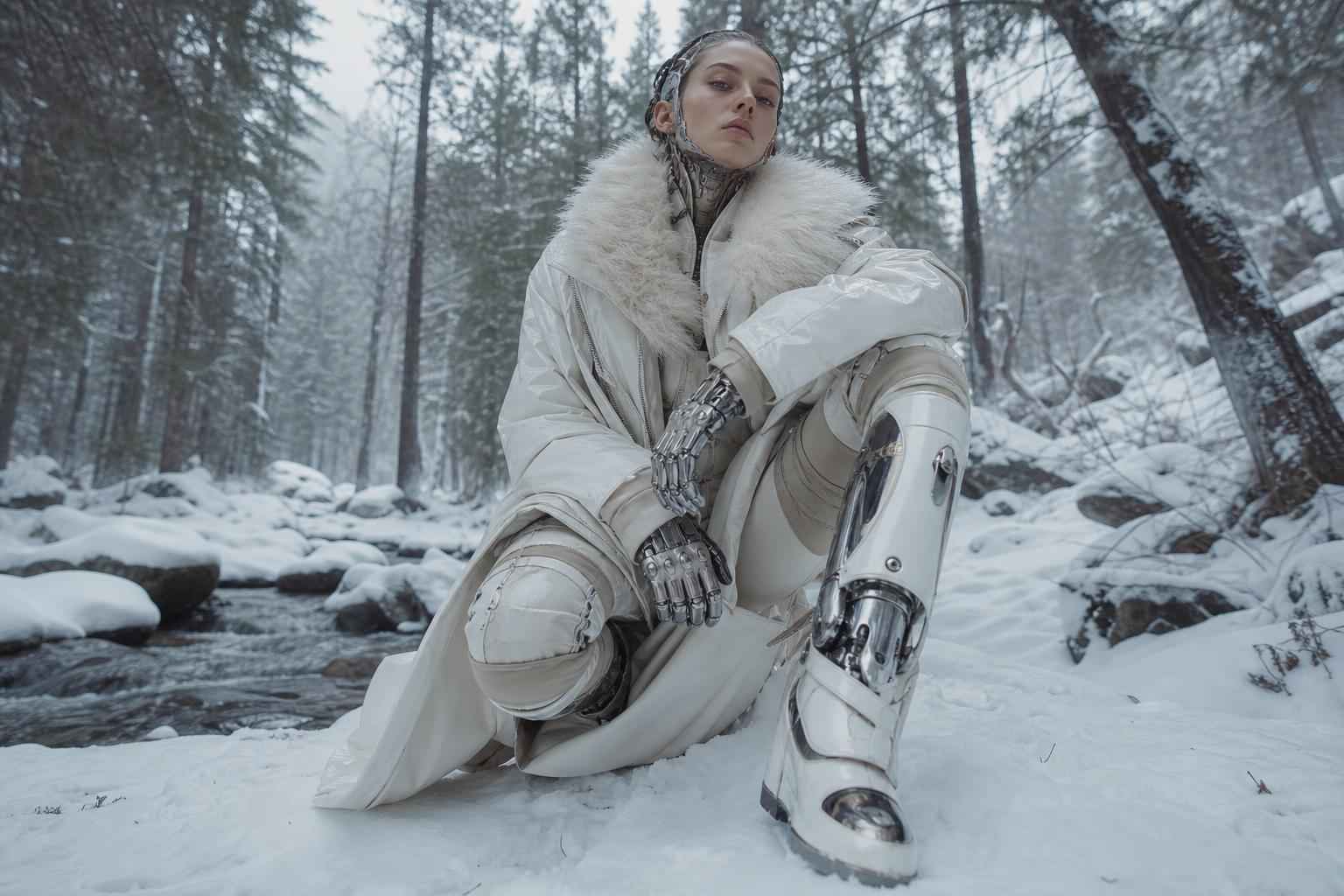
Midjourney Tips and Tricks: How to Create Better Brand Images With AI
What makes a brand image unforgettable? Is it the color palette, the emotion, the precision of the composition, or the story hidden between visual details? In today’s accelerated digital landscape, the answer is increasingly shaped by AI-powered creativity. And when it comes to visual ideation, Midjourney has become one of the most talked-about tools for creating striking, imaginative, and commercially useful brand imagery.
But here’s the real question: are you simply generating images, or are you building a recognizable brand world?
There is a major difference.
Many businesses experiment with AI image generation and end up with visuals that look interesting for a moment but fail to communicate trust, consistency, or strategic brand positioning. The brands that win are the ones using AI with a clear system, sharper prompts, better direction, and a stronger understanding of how visuals affect perception.
This is where smarter prompting, brand discipline, and creative leadership matter. With the right process, Midjourney can help create everything from campaign concepts and product staging to moodboards, hero visuals, social scenes, and visual identities that feel elevated rather than generic.
If your team wants to create better brand images with AI, this guide breaks down the practical and strategic Midjourney tips and tricks that lead to better results. Along the way, you’ll also see why businesses that want premium results increasingly choose to work with branding specialists like Brandlab to turn AI output into market-ready brand assets.
Why Midjourney Matters for Modern Branding
Midjourney is not just another image generator. It has earned attention for producing images with rich atmosphere, stylized realism, editorial quality, and concept depth. For brand teams, this is powerful because it allows rapid experimentation without the time and cost of traditional concept production for every early-stage idea.
From fast concepts to visual strategy
Think of Midjourney as an accelerator for brand storytelling. You can use it to test campaign moods, create premium-looking scenes, explore packaging environments, envision brand mascots, simulate lifestyle imagery, or generate directional artwork for future shoots.
According to Midjourney’s official website, the platform is focused on expanding human imagination. That’s an important distinction. The tool is strongest when used to amplify strategic creativity, not replace it.
The business case for AI imagery
Brands today need more visuals than ever before: social media posts, website banners, ad creatives, proposal decks, landing pages, moodboards, investor presentations, and product launch campaigns. AI offers a way to produce concept-quality imagery at speed, but speed alone does not create authority.
Ask yourself this: if your competitors can now generate images too, what will make your brand stand out?
The answer is better prompts, stronger vision, and tighter brand direction.
“AI gave us more options, but it was strategic brand direction that gave us the right option.”
— Common lesson from high-performing creative teams
Start With Brand Clarity Before You Write a Prompt
The biggest mistake businesses make with Midjourney is starting with aesthetics before strategy. They type in a few descriptive words, generate some attractive outputs, and assume they’ve created “brand imagery.” In reality, they have created isolated visuals without a coherent system.
Define your visual DNA
Before opening Midjourney, document your basic brand image framework:
- Brand personality: bold, elegant, disruptive, human, premium, minimal, playful
- Target audience: who needs to emotionally connect with the image?
- Visual mood: cinematic, clean, editorial, futuristic, artisanal, high-luxury
- Color direction: muted neutrals, energetic primaries, natural earth tones, monochrome
- Composition style: close-up, wide angle, negative space, product-centered, immersive lifestyle
- Use case: homepage hero, ad campaign, social media, packaging mockup, pitch deck
Without these foundations, the prompt may generate something beautiful but commercially useless.
Why strategy improves output quality
Midjourney responds to specificity. When you define emotional tone, brand aspiration, and intended use, you reduce randomness. The result is not just a better image, but a more useful image.
For evidence of how crucial consistent branding is, Forbes Agency Council discusses why brand consistency matters in building trust and recognition. AI visuals should support that consistency, not break it.
How to Write Better Midjourney Prompts for Brand Images
If you want better outputs, you need better creative instructions. A weak prompt gives Midjourney too much ambiguity. A strong prompt acts like a mini-creative brief.
Use prompt structure, not guesswork
A high-performing brand image prompt often includes:
- Subject: what is the main visual focus?
- Setting: where is it happening?
- Style: editorial, luxury, realistic, illustration, cinematic
- Lighting: soft morning light, dramatic studio lighting, golden hour, diffused daylight
- Lens/composition cues: close-up shot, wide-angle perspective, symmetrical composition
- Texture/material cues: matte, polished chrome, organic grain, velvet, glass
- Emotional tone: confident, serene, energetic, innovative
- Brand-relevant exclusions: no clutter, no text, no people, minimal background
Example of a basic prompt vs a better prompt
Weak prompt: create a premium skincare brand image
Better prompt: premium skincare serum bottle on a sculptural stone pedestal, soft diffused daylight, editorial beauty campaign style, muted beige and ivory palette, clean luxury aesthetic, minimal background, subtle reflections, high-end commercial photography, sophisticated composition
See the difference? The second prompt gives Midjourney a clearer world to build.
Use adjectives carefully
Piling on adjectives can weaken results if they conflict. “Minimal, maximal, luxury, raw, futuristic, vintage” may confuse the visual outcome. Choose descriptive language that aligns with one clear direction.
Midjourney Tips and Tricks That Instantly Improve Brand Visuals
1. Build prompts in layers
Don’t try to solve everything in one line. Start broad, then refine. Generate a first round to find a direction, then sharpen the next prompts using what worked: better lighting, stronger angles, more negative space, or more product focus.
2. Reference visual genres your audience already trusts
Words like editorial photography, luxury campaign, product advertising, Scandinavian minimalism, or cinematic storytelling carry visual meaning. They help shape outputs in a way users recognize and believe.
3. Control consistency across a campaign
One of the biggest branding challenges with AI is inconsistency. Create a prompt system that repeats core elements: color tones, styling vocabulary, atmosphere, camera perspective, and material language. Consistency creates confidence.
4. Use negative prompting sensibly
If your outputs keep becoming cluttered, awkward, or off-brand, specify what you do not want. For example: no text, no watermark, no extra objects, no crowded background, no distorted hands, no low detail.
5. Think in campaigns, not single images
A strong brand rarely relies on one visual. Instead, it owns a whole image family. Ask: what would this look like as a homepage banner, Instagram carousel, brochure cover, and paid ad set? The answer can shape more versatile prompts.
6. Prioritize emotion over novelty
Many AI images look impressive but emotionally empty. Great brand visuals make people feel something specific: trust, excitement, aspiration, calm, belonging, or ambition. Emotion is what turns visuals into persuasion.
7. Edit and curate ruthlessly
Not every generated image deserves to live. Professional creative teams do not use all outputs; they select, refine, combine, and direct. The quality comes as much from curation as creation.
Creating Better Brand Images by Industry
Different sectors require different visual languages. What works for a beauty brand may fail for a B2B software company. Midjourney becomes more effective when prompt writing reflects category expectations.
Luxury and premium brands
Focus on restraint, material detail, elegant lighting, and elevated composition. Premium branding usually performs better with simplicity than excess.
Tech and innovation brands
Use language around clean interfaces, futuristic realism, precision, modular forms, ambient glow, intelligent systems, and sleek spatial composition. Avoid overused generic “cyber” visuals unless they truly fit the brand.
Food and beverage brands
Prioritize appetite appeal, tactile texture, freshness cues, and authentic context. Lighting and realism matter heavily here. Over-stylized results can reduce believability.
Wellness and lifestyle brands
Think atmosphere, softness, natural materials, aspirational calm, and human-centered storytelling. Ask what your audience wants to become when they choose this brand.
Comparison Table: Weak AI Brand Imagery vs Strong AI Brand Imagery
| Element | Weak AI Imagery | Strong AI Brand Imagery |
|---|---|---|
| Prompt Quality | Vague and generic | Specific, strategic, brand-led |
| Brand Consistency | Random styles each time | Repeated visual system across assets |
| Commercial Usefulness | Looks interesting but lacks purpose | Built for campaigns, web, ads, and presentations |
| Emotional Impact | Novel but forgettable | Clear feeling aligned to target audience |
| Creative Direction | Tool-led | Brand-led and strategically curated |
What the Best Creative Teams Do Differently
Top teams do not use Midjourney casually. They use it methodically. They brief it like a collaborator, evaluate it like an art director, and apply it like a brand strategist.
They know the difference between inspiration and implementation
Some AI visuals are brilliant inspiration pieces but not ready for public use. They may require retouching, adaptation, typography integration, layout design, or legal and brand review before going live.
They combine AI with human taste
This is the advantage many businesses underestimate. Technology can multiply options, but human judgment determines which option wins in the market.
Harvard Business Review has explored how generative AI can augment human creativity, reinforcing the idea that the best outcomes often come from partnership between machine generation and human direction.
“The prompt creates possibilities. The brand strategy chooses the future.”
— A mindset every ambitious brand should adopt
Common Mistakes to Avoid With Midjourney Branding
Using AI to imitate without differentiating
If your prompts simply mimic trends, your brand visuals may look current but not memorable. Distinctiveness is the real goal.
Chasing perfection too early
AI works best as an exploratory tool before refinement. Generate widely first, narrow later.
Ignoring practical application
Can the image support copy? Crop for mobile? Align with your website design? Match print output? Great images still need functional value.
Forgetting trust signals
Some AI-generated content can feel uncanny or too artificial. If trust matters in your market, make sure your imagery feels polished, believable, and aligned with your brand’s promise.
A Simple Visual Chart: The AI Brand Image Maturity Curve
| Stage | Typical Behavior | Business Outcome |
|---|---|---|
| Experimenting | Random prompts, trend chasing | Interesting visuals, low brand value |
| Organizing | Creating repeatable prompt systems | Better consistency and efficiency |
| Strategizing | Linking visuals to brand positioning | Higher quality customer perception |
| Scaling | Using AI across campaigns and touchpoints | Competitive brand advantage |
Why Brandlab Can Help You Get Better Results Faster
Here’s the truth many businesses discover after trying to do everything internally: AI tools reduce production friction, but they do not eliminate the need for expert brand thinking. If anything, they make strategy even more valuable, because more options create more risk of inconsistency.
From prompts to brand assets
Brandlab can help transform AI-generated ideas into a coherent brand image system that works across digital touchpoints. That means more than generating visuals. It means refining direction, curating outputs, shaping campaigns, aligning imagery with positioning, and ensuring your visuals say the right thing to the right people.
Why settle for generic when your brand could lead?
Your audience is seeing more content than ever before. More ads. More posts. More brands trying to appear premium, modern, or disruptive. So why not get the solution that helps you rise above noise with clarity?
Why not create imagery that looks not only stunning, but unmistakably yours?
Why not turn AI from a novelty into a brand growth tool?
Final Thoughts: Better AI Images Start With Better Brand Thinking
Midjourney is opening remarkable creative possibilities. It can help brands move faster, visualize more boldly, and unlock image directions that might have taken weeks to explore through traditional methods. But the brands that truly benefit are the ones that treat AI as part of a bigger creative strategy.
The future does not belong to brands that simply use AI. It belongs to brands that know how to use AI with purpose.
So as you experiment with Midjourney tips and tricks, keep this in mind: better prompts create better images, but better brand thinking creates better business results.
If you are ready to move beyond trial and error and build image systems that strengthen your positioning, inspire your audience, and elevate your presence, why not get the solution now? Contact Brandlab and turn AI-generated creativity into a brand advantage worth seeing.
Focused keyphrases: Midjourney tips and tricks, create better brand images with AI, AI brand imagery, Midjourney branding prompts, AI visuals for branding, brand image strategy with AI.